T
he threat of a workforce shortage has long loomed over Hawai‘i’s building industry and skilled trades.
The Hawai‘i Department of Business, Economic Development & Tourism projects continued growth within the construction sector, with the number of jobs in the fourth quarter of 2025 alone increasing by 6.9%.
While bigger projects and bids continue, a surge of retirements also advances throughout the trades. Baby boomers are leaving the workforce, with elder Gen Xers following behind, resulting in a tighter labor market for Hawai‘i’s growing building industry.
Alongside the overall demand, the Hawai‘i Clean Energy Initiative — which mandates 100% clean energy renewable portfolio standards by 2045 — is not only driving major infrastructure changes but also increasingly affecting the skilled trades workforce.
While some of the jobs created by the mandate are residential-specific, the overlap between jobs and sectors puts a strain on Hawai‘i’s already limited skilled-trades labor pool. Addressing the workforce shortage will undoubtedly require coordinated industry efforts crossing the private and public sectors.
Clean Energy and Skilled Trades: A Symbiotic Relationship
One proactive workforce initiative began in 2023 with a collaboration between the Hawai‘i State Energy Office (HSEO) and the University of Hawai‘i Community College’s (UHCC) Good Jobs Hawai‘i program.
Good Jobs Hawai‘i has multiple programs focusing on overall workforce development in sectors including healthcare, clean energy/skilled trades, technology and creative industries.
The main initiative of their partnership with HSEO focuses specifically on the clean energy sector, in which they address the labor shortage and facilitate productive careers to locals by providing industry-specific education and employment pathways.
“When we talk about clean energy, it’s really difficult to separate the clean energy component and the skilled trades component as they’re so mutually compatible and skilled trades are needed to support clean energy,” says Good Jobs Hawai‘i Program Manager Marshall Norman. “Clean energy in turn is also … supporting the skill trades. So it’s very much a symbiotic relationship between the two.”
To meet the growing workforce demands, the Good Jobs Hawai‘i program focuses on recruitment, training and retention within the state.
“We’ve enrolled over 1,400 clean energy and skilled trades participants within our training program. So we actively measure not only enrollments, completions, employment placement opportunities and also wage[s],” says Norman.
One of their main objectives is career pathway alignment. This starts by engaging students as early as middle school, informing them of career opportunities within the clean energy skilled trades, and later providing applicable training and ultimately job placement.
Multisector Partnerships
A driving force behind HSEO and Good Jobs Hawai‘i’s education strategies is their Clean Energy Sector Partnership (CESP) which began in May 2023 and meets periodically both in-person and virtually.
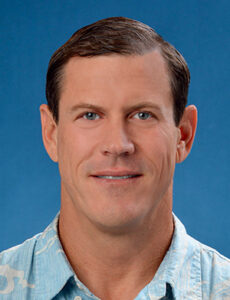
The CESP forum brings together industry leaders engaged in workforce development — including employers, unions and industry organizations — to “identify common needs in the workforce, identify available resources … and help guide … course offerings and developments,” explains HSEO Jobs and Outreach Branch Manager Cameron Black.
“We have a kind of an open-door policy,” says Black. “If you have a workforce need, or a resource, or you’d like to be part of a group that talks about common needs and opportunities in the workforce sector, we welcome anybody to join our Clean Energy Sector Partnership.”
These meetings help Good Jobs Hawai‘i tailor courses specifically to local industry needs, offering foundational skills and industry-recognized credentials across the UHCC system.
Partnerships with union-affiliated organizations — like the free eight-week carpentry pre-apprenticeship program in collaboration with Hawaii Carpenters Apprenticeship and Training Fund — and broader building industry partners allows program graduates to continue on to apprenticeships and industry jobs.
Good Jobs Hawai‘i’s foundational safety courses include cross-sector skills like CPR, first-aid and OSHA certification.
They also offer courses and pre-apprenticeship training in roles that span sectors including HVAC installers and technicians, carpentry and electrical.
Much of Good Jobs Hawai‘i’s programs are completely free to qualifying individuals and focus on renewable energy roles including certifications, installation and maintenance, across renewable energy trades.
| Technology | 2020 Job Estimates | 2030 Job Estimates | Job Growth Needed to Meet 2030 Demand |
|---|---|---|---|
| Solar Energy | 3,728 | 6,455–9,608 | 2,727–5,880 |
| Wind Energy | 261 | 320–491 | 59–230 |
| Battery Storage | 319 | 942–1,796 | 623–1,477 |
| Energy Efficiency | 178 | 783 | 605 |
Grid-Infrastructure and Growth
A closer look at Hawai‘i’s renewable energy and grid-infrastructure projects can highlight the growing demands that the clean energy sector will place on the skilled trades workforce.
The Hawai‘i Skilled Trades Workforce Analysis 2023 stated there were “an estimated 143 large-scale renewable energy projects currently operational or in development in Hawai‘i as of April 2023 … spanning a variety of renewable technologies.”
The analysis also estimates the job growth necessary from 2020 job estimates to meet clean energy labor demands by 2030. Spanning solar energy, wind energy, battery storage and energy efficiency, they predicted anywhere from 4,014 to 8,192 jobs could be created, as shown in the chart above.
Hawaiian Electric Co.’s Integrated Grid Plan (IGP) is one of the driving forces behind Hawai‘i’s grid-infrastructure transition to renewable energy.


Ken Aramaki, Hawaiian Electric’s director of integrated grid planning, says the IGP “outlines a clean energy strategy, necessary grid upgrades and ways to maintain reliability and affordability as older power sources are retired.”
“The IGP forecasts the needs … of the system to develop long-term electric infrastructure plans and projects,” says Aramaki. “Projects including renewable energy facilities, generation developments, substations and upgrades to transmission and distribution systems will need the expertise of design and construction firms.”
Hawai‘i’s renewable energy shift also brings an added element to Hawai‘i’s skilled trades workforce development: Besides bringing in new workers, employers must also focus on upskilling the current workforce to the new infrastructure and technology.
“The transition to renewable-energy grid infrastructure is transforming Hawaiian Electric’s apprenticeship and training strategies,” says Yoh Kawanami, Hawaiian Electric’s director of human resources. “This shift extends beyond the replacement of retiring personnel, requiring comprehensive preparation of our workforce for increasingly sophisticated, digital and distributed energy systems.”
New infrastructure projects pull from the already in-demand workforce. Key workers affected range from installers, operators and technicians to managers and engineers.
Kawanami suggests that training programs adjust curriculum to include “the latest renewable technologies, such as inverters, energy storage and controls.”
He says Hawaiian Electric is approaching the training shift with three main strategies:
1. Adjusting programs to cover new technologies and grid modernization
2. Incorporating “new technology-oriented and operational training” earlier into apprenticeship pathways
3. Strengthening “collaborations with community colleges and workforce organizations”
Hawaiian Electric is also developing the Hawaiian Electric Academy to upskill their current workforce and guide training. Kawanami says this program will “centralize leadership and foundational training for all team members.”
Marketing Matters
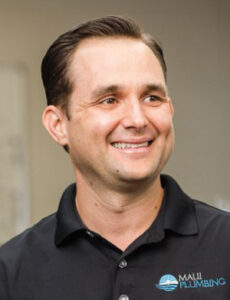
Ray Michaels, chair of Construction Industry of Maui (CIM) and president of Maui Plumbing Inc., says that the shortage of electricians is one that has been acutely felt on Maui. He maintains that the workforce shortage overall requires a multifaceted approach possibly including legislative changes and educational reform.
One key challenge noted by Michaels is the Hawaii Revised Statutes (HRS) § 444-9.5(b), which in part limits the number of apprentices per licensed journey worker on a construction site.
This limitation has become a significant hurdle to replacing retirees at scale. It also highlights the dilemma of how Hawai‘i’s current skilled trades training programs will balance the urgency of training new workers with the logistics of training a safe and competent workforce.
CIM also raises money for local Maui high schools to develop vocational trade programs that generate interest and skills at a young age.
The decline of vocational training in high schools began when public education shifted its focus to college preparation. Michaels comments that revitalizing these vocational programs could significantly pique student interest and provide them with foundational skills for future careers.
“I think giving the younger individuals a clear path, starting with vocational training and giving them that as an option is going to be the best way to start to boost our numbers,” says Michaels.
First and foremost, Michaels says the industry needs to increase interest and awareness of the viability of careers in the skilled trades at a younger age.
“We haven’t marketed ourselves very well in the last 10, 15, 20 years. But the industry is getting better at that,” says Michaels. “I think that you see the younger generation looking for an alternative to a four-year degree and to student loans. So I think the trades have become ultimately more attractive to the younger generations.”
Reframing the younger generation’s overall outlook on the skilled trades as well as showcasing opportunities for advancement within Hawai‘i is crucial to building a stronger local workforce.
Norman echoes this sentiment, saying that for effective recruitment and workforce retention, the industry as a whole needs to show students “that we have very good job opportunities here, and to engage in a career pathway development that exists entirely … within the state of Hawai‘i.”