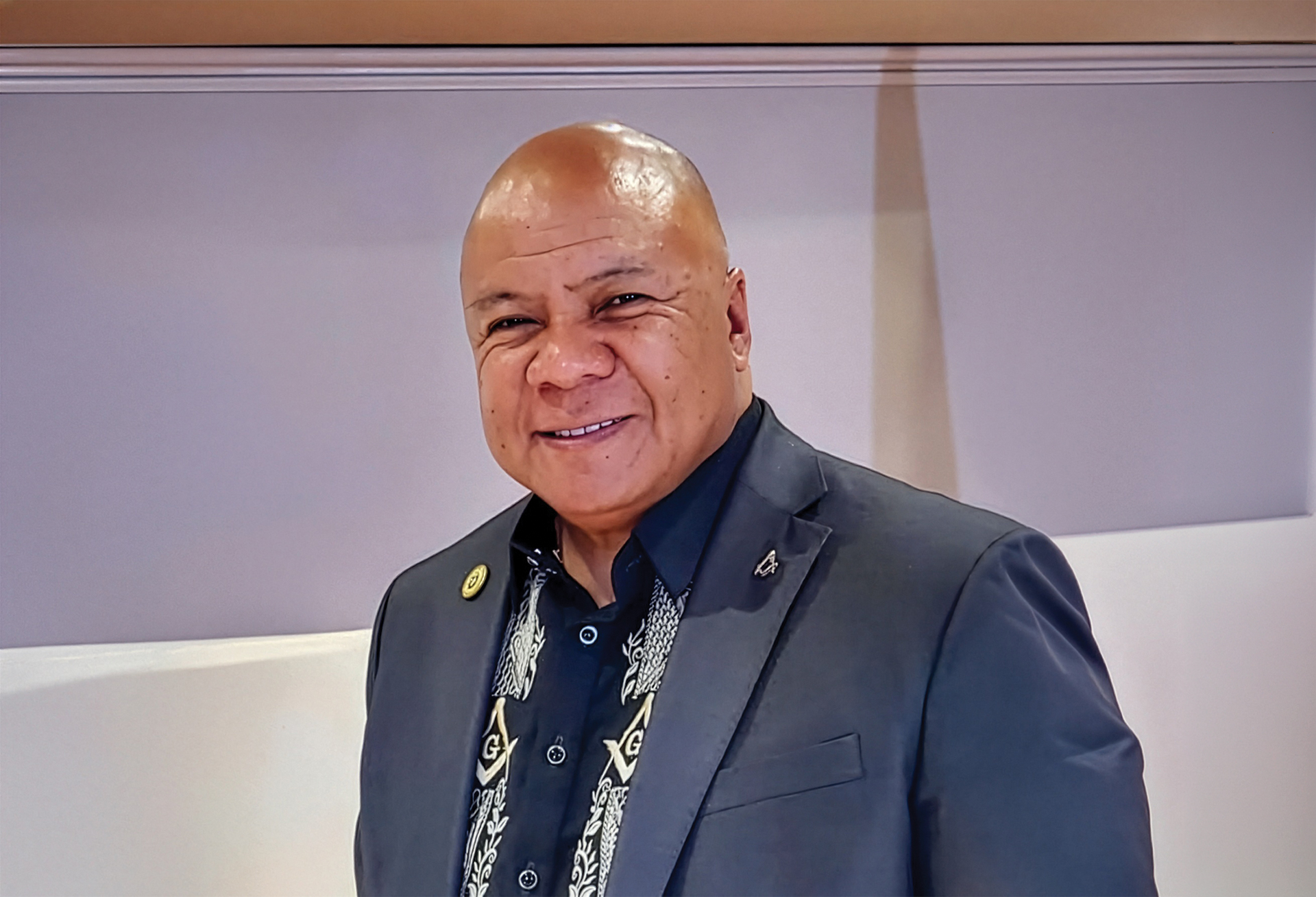
Nan Chul Shin, founder and owner of leading Hawai‘i general contracting firm Nan Inc., revealed the genesis of one of Honolulu’s most spectacular new condominiums during a 2019 interview with Building Industry Hawai‘i.
“My goal is, I want to develop more,” he said.
Shin was renowned as a top-notch contractor and tireless competitor. But outside Nan Inc., few believed he would succeed as a developer.
Shin persevered and formed Keeaumoku Development Owner LLC (KDO), a development arm.

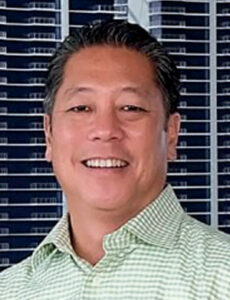
“There were a lot of doubters and skepticism on if our team could do it,” admits Nan Inc. Project Manager Chad Korenaga.
Other key members of Korenaga’s team included Assistant Project Manager Alex Chiya and Project Superintendent Dennis Loa King.
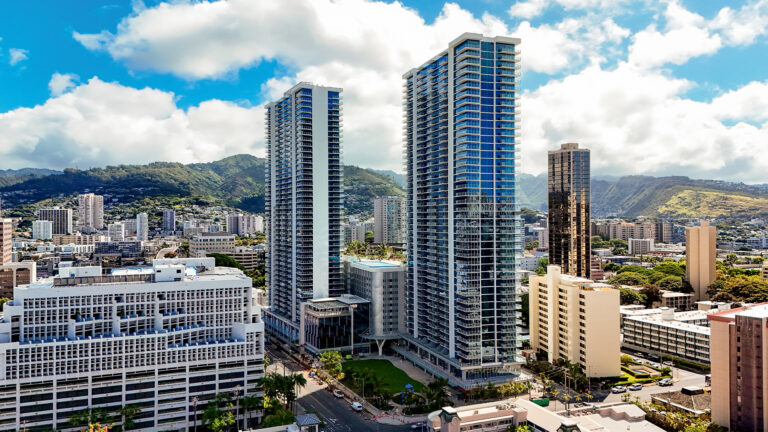
Christened “The Park on Ke‘eaumoku,” the project was named for a future park slated for the site and its location on the corner of Ke‘eaumoku and Rycroft streets near Ala Moana Center.
The project’s biggest challenge, says Wyeth Matsubara, Nan Inc. vice president, “was the scale … [the] project’s construction loan alone is well over a half-billion at $528 million.”
As vice president, Matsubara handles fiscal challenges. For Korenaga, at ground level, challenges are up close and personal.
Two Towers, 972 Units
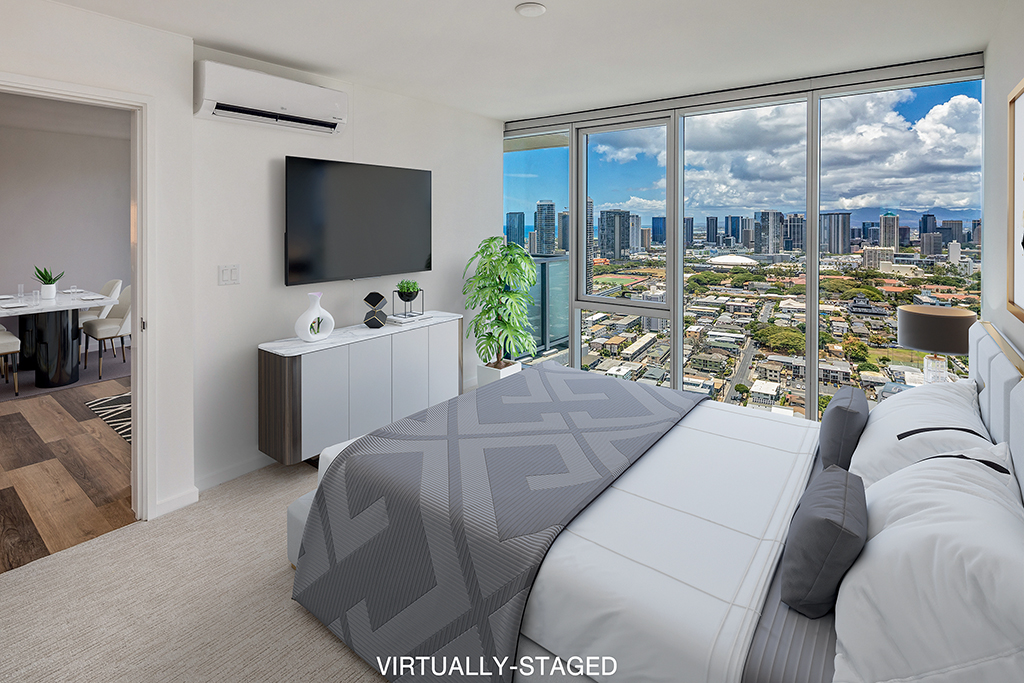
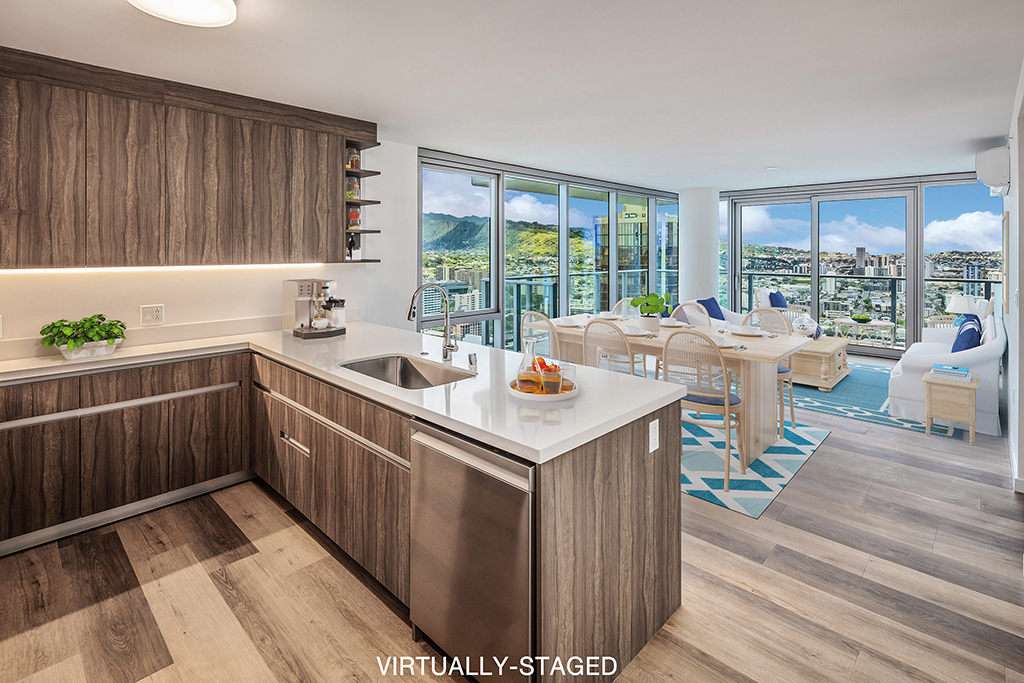
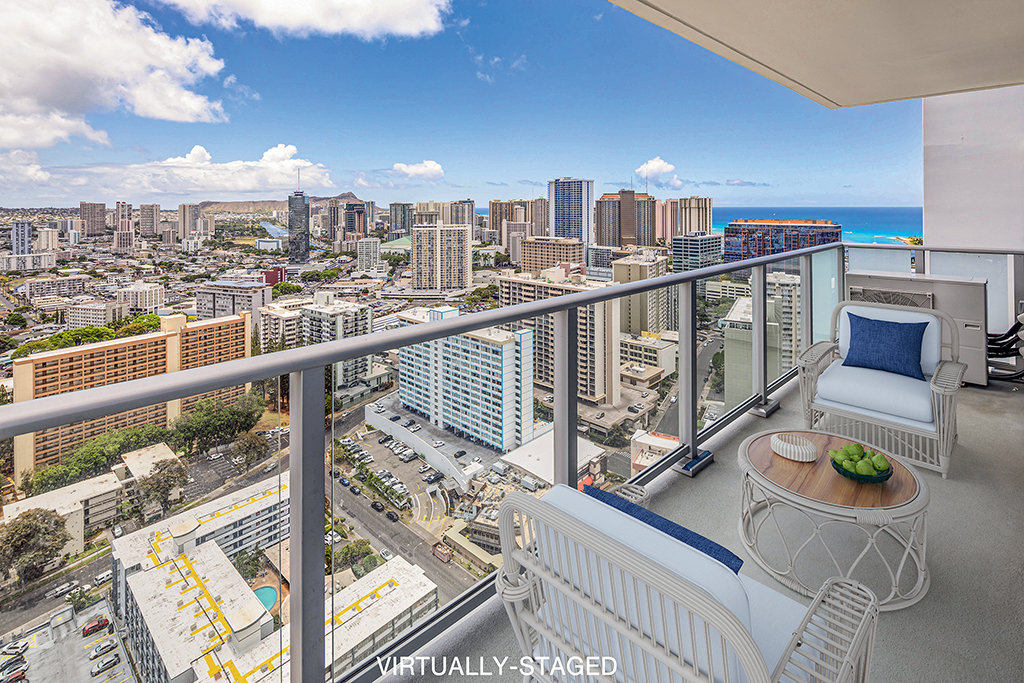
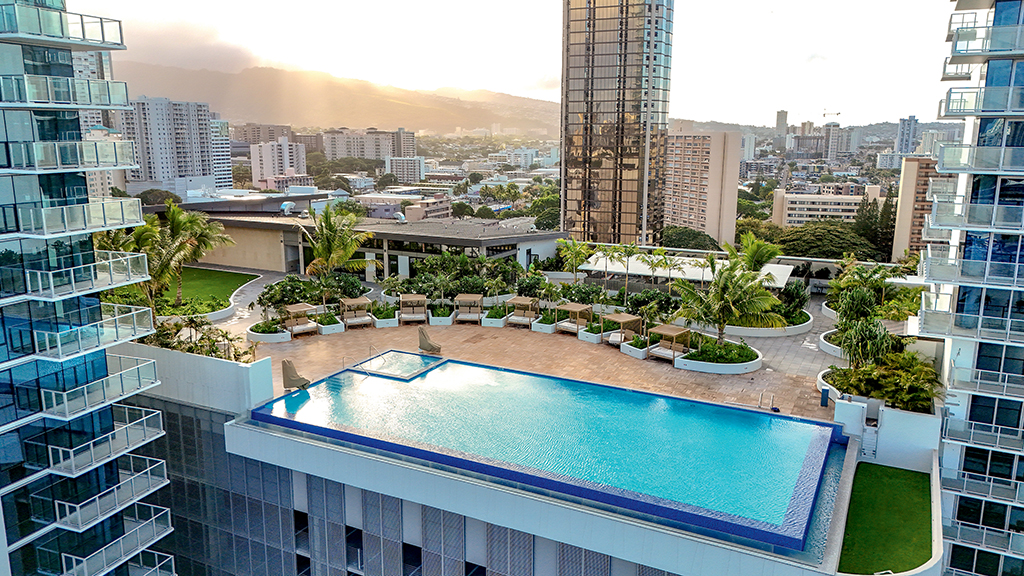
The Park on Ke‘eaumoku called for two 44-story towers containing 972 residential condominium units in all — 826 market-rate and 146 affordable — connected by a mid-rise building containing a parking garage and upscale amenities.
The towers would overlook “a beautifully landscaped, nearly half-acre public park that serves as a green oasis amid Honolulu’s urban core,” Korenaga says.
The 3.52-acre mixed-use complex would also feature about 72,000 square feet of commercial space in the towers’ first and second floors and in the adjacent mid-rise.
“As project manager, I was responsible for full lifecycle execution of this large-scale, multi-structure development,” Korenaga affirms.
That means everything — overall project planning, scheduling and sequencing of all structures; coordination of dual tower vertical construction and crane operations; oversight of subcontractor procurement, scope alignment and performance; budget management, cost control and change management; quality control and enforcement of project plans and specifications; coordination with ownership, design teams and the construction team; and managing inspections, turnover sequencing and project closeout.
Synchronized Vertical Construction
Raising two high-rises simultaneously in a congested urban corridor required tower cranes with tie-back systems, coordinated dual operations and lifting zones, air rights’ coordination with neighboring properties — and intense concentration.
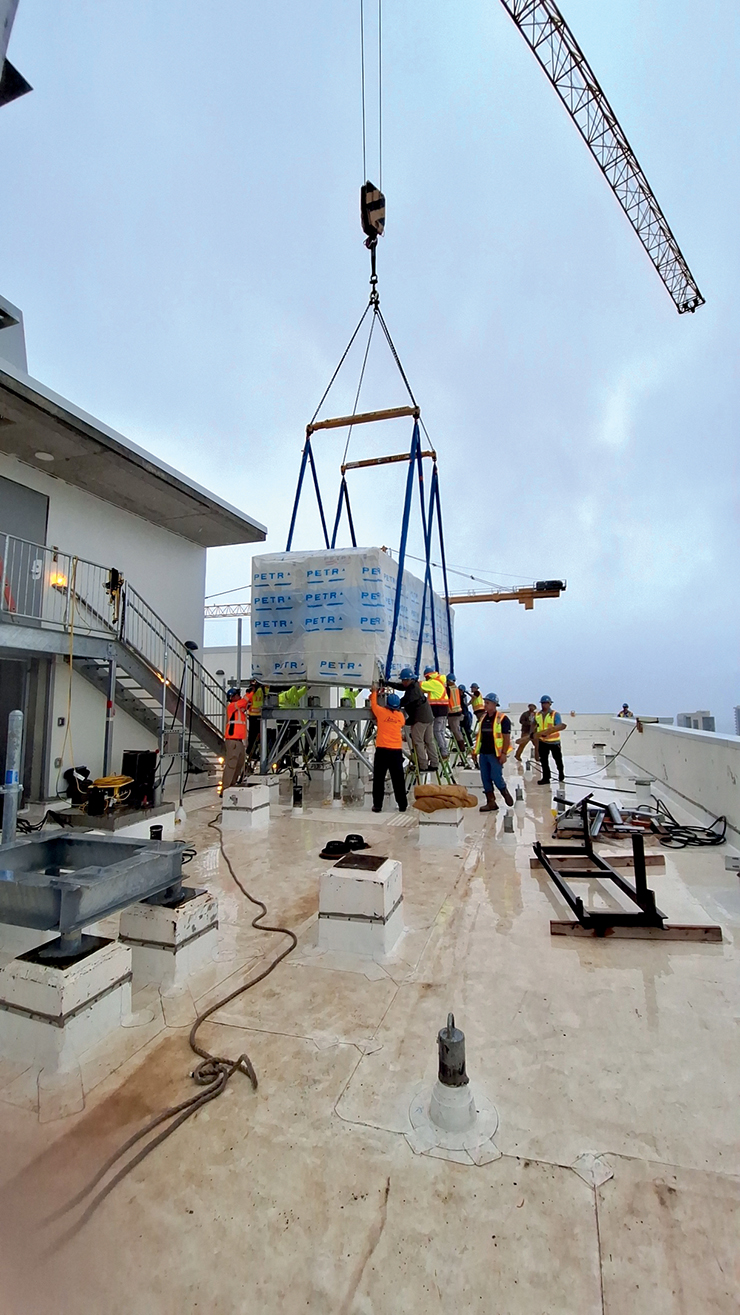
Kerwin Chong, vice president of project subcontractor Hawaiian Crane & Rigging Ltd. (HCR), says one May 2025 HCR project operation involved the take-down of a Liebherr 420 tower crane.
“This has to have been the most challenging tower crane removal in HCR history,” Chong reports. “HCR worked closely with Nan Inc. field engineers to ensure removal of [Hawaiian Electric] poles, deenergizing lines, groundwork [and other tasks]” in preparation for HCR’s nighttime operations with Morrow Equipment Co. LLC, Northwest Tower Crane Service Inc. and Hawaiian Electric Co. Inc.
Mounting Pressure
As the project took off, Korenaga reports other site-related pressures included “strict noise and working hour restrictions impacting early-morning and weekend operations, material delivery constraints requiring just-in-time logistics, and high-volume unit turnover sequencing [of] 972 units requiring phased completion.”
He says the team also grappled with “maintaining [the] schedule across multiple building types and scopes, addressing unforeseen field conditions and design adjustments, manpower restraints with no one on the bench and the need for more production [and] office personnel being inexperienced in high-rise construction.”
“They learned a heck of a lot and contributed to get the job done,” he smiles.
Seamless Support
Korenaga says project coordination was achieved through “a structured and disciplined communication approach.”
This entailed “daily superintendent and trade coordination meetings, weekly OAC (owner-architect-contractor) meetings, detailed look-ahead schedules, direct communication with Nan Shin himself for high-level decisions, continuous coordination between tower teams to maintain synchronized vertical progress and clear delegation of responsibilities for Nan Inc. and all subcontractors.”
Project subcontractors responded whole-heartedly from the start.
Wasa Electrical Services Inc. provided “a complete electrical system, including power, lighting, emergency system, fire alarm and testing,” says Wasa Supervising Electrician Ronie Cabico. “Wasa started demolition [in] approximately June of 2022 with electrical underground work starting [in] approximately October of [the] same year.”
Mechanical subcontractor Dorvin D. Leis Co. Inc. (DDL) also provided early on-site support.
“The project began groundwork in June 2022,” says David Yu, DDL senior project manager. “DDL’s scope included plumbing, HVAC (heating, ventilation and air conditioning) and fire protection systems for the residential units, parking structure, recreational deck, back-of-house and common areas.”
As the towers went up, cross-trade coordination was equally critical.
A-American Custom Flooring (AACF) Inc. “provided labor to install tile, stone, countertops, pedestals and exterior mechanical stone slabs,” says Benny Capalnas, the company’s vice president. The AACF team supported the Nan Inc. crew “by providing strong coordination with other trades and consistent on-site communication.”
Quick to acknowledge the contributions of all trades, Korenaga singles out one.
Dorvin D. Leis Co. Inc. “performed the plumbing, mechanical, HVAC and fire sprinkler work. This was a very difficult project to coordinate and they supported us from Day One,” he says.
Home-Team Strategies
In addition to specialized cranes, Nan Inc. employed special equipment, software programs and techniques to align the project’s many scopes of work.
Korenaga cites hoist systems for high-volume vertical transportation of labor and materials; construction-scheduling software (Primavera P6); Autodesk Build for document control, Requests for Information (RFIs) and submittals; Building Information Modeling (BIM) coordination to reduce clashes across multiple structures; and phased turnover and punch-list tracking systems for unit delivery.
He also reports Nan Inc. team members worked as one:
“The team demonstrated a strong ‘can-do’ attitude by rapidly adjusting sequencing to maintain [the] schedule, collaborating across trades to solve conflicts in real time, maintaining productivity despite logistical constraints and working long and late hours to get the job done.”
Crowning Glory
The Park on Ke‘eaumoku wrapped on August 22, 2025 — under-budget and six months early, reports Korenaga.
Matsubara says Nan Inc. achieved all its goals and more — “strong execution of a complex, multi-structure project; effective coordination and problem-solving in challenging conditions; the ability to maintain schedule despite logistical and operational constraints; [and] professional communication and responsiveness throughout the project.”
Korenaga agrees, adding that “on a project of this size, it is never just one person or one scope. It is a full team effort.”
“My most satisfying achievement,” he says, “was leading our team to successfully deliver Nan Inc.’s first high-rise project ahead of schedule and under budget.
“Despite early skepticism and doubt from others about whether we could execute at that level, our team rose to the challenge, proved our capabilities and delivered a complex, large-scale development with confidence and pride.”
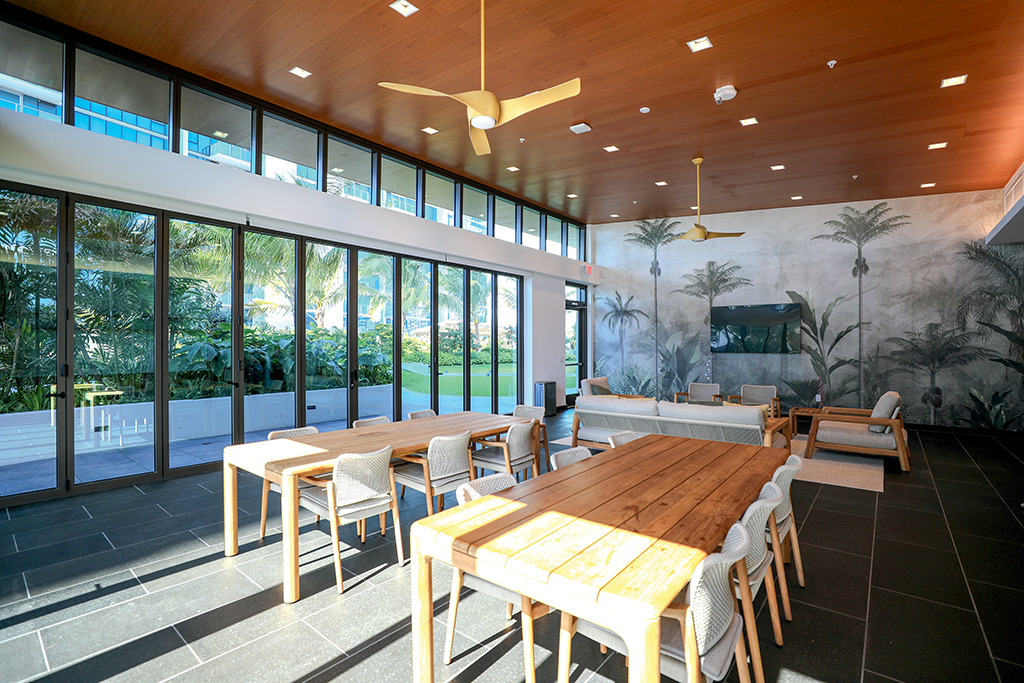
PHOTO COURTESY nan inc.
Valued Subcontractors and Suppliers in Alphabetical Order
| A Team Pacific Roofing Inc. A-American Custom Flooring Inc. Airgas American Standard Concrete Pumping Hawaii Inc. B & C Trucking Co. Ltd. Belmonte’s Roofing & Waterproofing LLC Bonded Materials Co. Caulking Hawaii Inc. Charter Communications Inc. Coffman Engineers Inc. Communication Consulting Services Inc. Curtainwall Design Consulting Inc. D.L. Adams Associates Ltd. David’s Fencing Inc. Design Partners Inc. Dial Electric Supply Co. Inc. Dorvin D. Leis Co. Inc. Endelman & Associates PLLC FBM Ferguson Enterprises LLC Floor-Tech Group Hawaii LLC Fortune Shepler Saling Inc. Geolabs Inc. GoldenHome International Inc. Goldwings Supply Service Inc. G P Roadway Solutions Inc. Grace Pacific LLC Harris Rebar South Pacific Inc. Hawaiian Crane & Rigging Ltd. Hawaiian Dredging Construction Co. Inc. | Hayre McElroy & Associates LLC HC&D LLC Honolulu Disposal Service Inc. Honsador Lumber LLC HPM Building Supply Inspired Play LLC InSynergy Engineering Inc. Island Pacific Distributors Inc. Island Pacific Installers LLC Mid City Restaurant Supply Mid Pacific Steel Morrow Equipment Co. LLC Northwest Tower Crane Service Inc. Otis Elevator Co. Pacific American Lumber Pacific AquaScapes Inc. Pacific Aqua Tech Inc. Pacific Building Materials Inc. Protech Fire & Security LLC Technologies Group LLC Tile Tech Tileco Inc. Timberland Hawaii Wabisabi-Hawaii LLC Walters Kimura Motoda Inc. Wasa Electrical Services Inc. WE Painting Inc. Wilson Okamoto Corp. Window World Inc. WSP VDV Communications LLC |