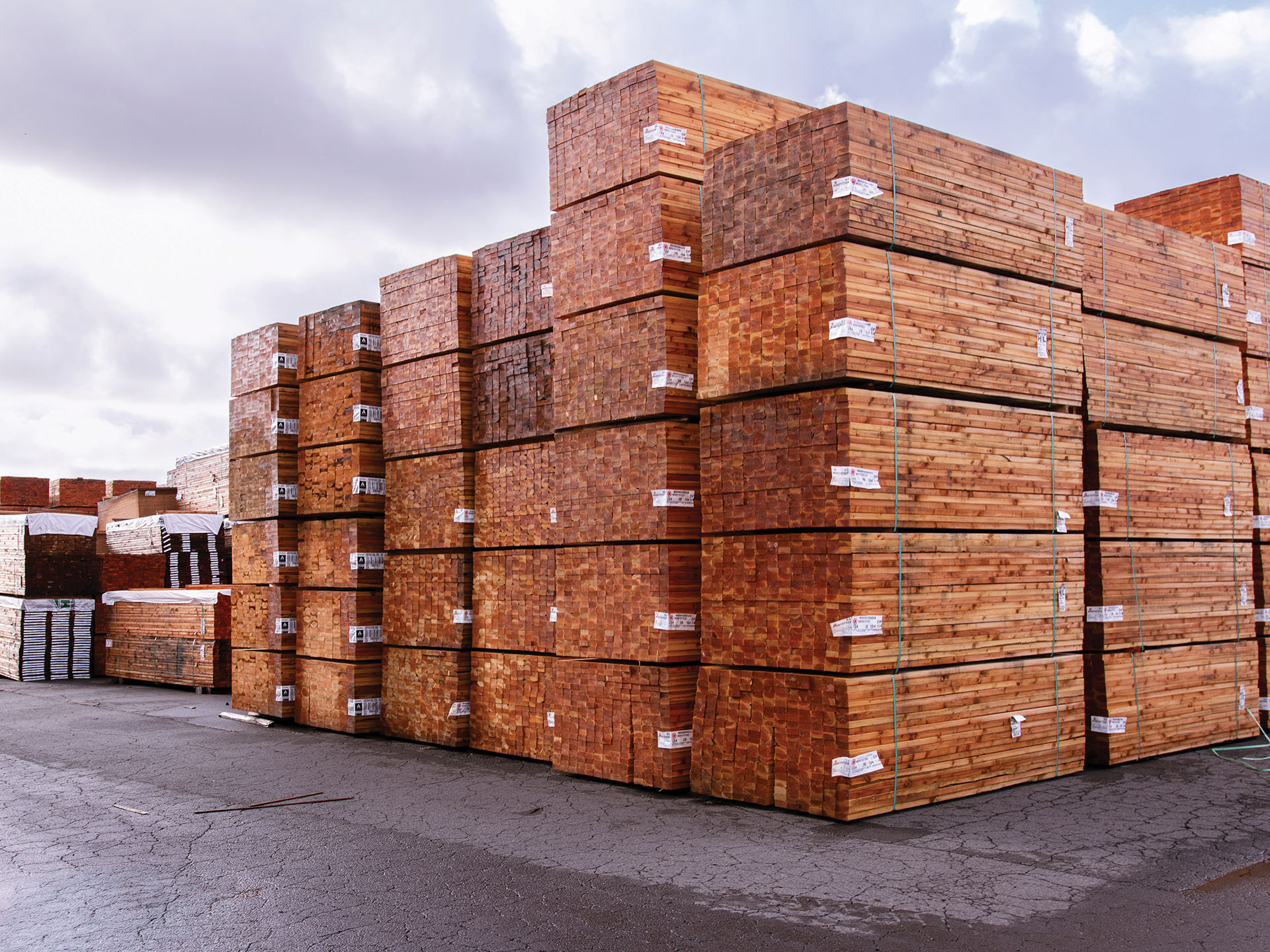
Even casual observers of the economy are aware of painful disruptions to the status quo. Beyond even the gas pump or supermarket checkout line, the pain is radiating out to all sectors, touching major conglomerates, mom-and-pops and everyone in between.



These fluctuations affect construction as well, with tariffs, gas prices and overall inflation having a direct impact on the costs of materials, transportation and equipment. Wood and lumber are further affected by climate, with pernicious wildfire seasons, droughts or ever-larger storms impacting supply.
All of these factors combined have forced Hawai‘i’s manufacturers and suppliers of wood, lumber and related products to confront and weather an ever-shifting status quo.
“This past year has been one of the more challenging stretches our industry has navigated in recent memory,” says Daniel Mastuura, a senior buyer with HPM Building Supply. “The combination of fluctuating tariffs, evolving trade agreements, persistent inflation and broader economic uncertainty has made forecasting and procurement notably more complex,” he adds, with fuel costs directly impacting the transport of materials on sea, land and air.
Matsuura is not alone in this assessment.
“It’s certainly been a tumultuous year, and global events from shifting trade policies to inflation have impacted the entire industry,” says Honsador Lumber Senior Director Tyler Williams.
Honsador’s tack has been to remain “focused on its core basket of goods and services,” enabling the company to maintain stability
for customers. “While the past 12 to 18 months have included periods of erratic market behavior, we’ve successfully navigated these challenges by remaining solution-oriented and maintaining consistent programs.”
Natascha Roblee, who handles sales and architectural specifications for Pacific American Lumber Inc., finds the company in a similar situation.
She laments the current state of affairs, but notes that they “… just try to be as transparent as possible with our customers about any tariff charges or fuel surcharges on the products that are due to the current administration’s decisions.”
“Navigating uncertainty is now part of the job,” says Matsuura, “and our focus remains on keeping product flowing reliably to the communities
we serve.”
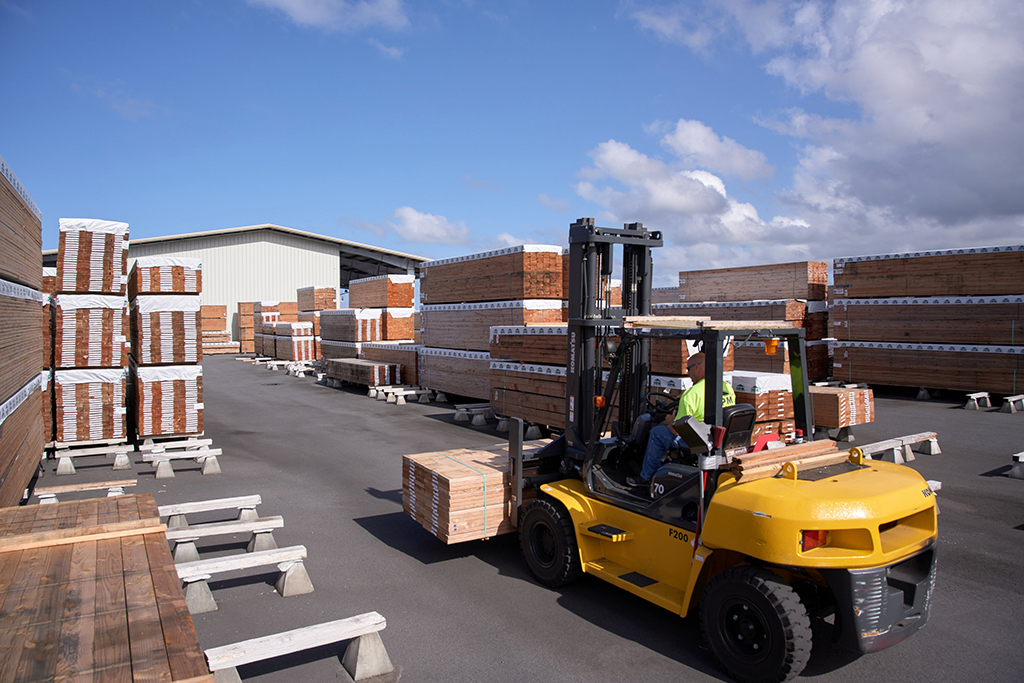
Climate Woes
The effects of climate change, including droughts, storms and even disease, have very real impacts on the availability of material.
Pacific American Lumber features ‘ōhia and other native and exotic hardwood and lumbers in its selection, sourced from around the world, including the Pacific Rim, Asia, Europe and the Americas. Says Roblee, “‘Ōhi‘a lumber used to be abundant and able to be used for flooring as well as posts and fence lines — in old Hawai‘i as well as current times — and now it is at [risk of] being wiped out from rapid ‘ōhi‘a death,” a fungal disease that has been ravaging the native tree primarily on Hawai‘i, though it has also been confirmed on Kaua‘i, O‘ahu and Maui.
The size and scale of HPM and Honsador’s respective operations allow them to soften the impacts of climate change by working closely with their suppliers, forecasting material needs as best as they can several months out, and making adjustments as necessary when conditions change. Having a wide sourcing footprint and inventory
reserves allow them to be somewhat more nimble and resilient in tough times.
A Cautious Boom
While the economy and climate give several reasons for trepidation, there are positive signs offering cautious optimism to the industry. It is difficult to anticipate how the local construction boom will impact the wood and lumber sector here, but the general outlook appears to be hazy with positive indicators.
“While the construction industry in Hawai‘i has remained strong, the broader U.S. market has experienced more uncertainty,” says Williams, adding that “uncertainty still remains a key factor. Ongoing geopolitical developments, inconsistent interest rate direction and unresolved tariff conditions continue to influence the market. How these factors evolve over the coming months will be critical to the sustained growth and stability of the industry.”
“There is meaningful opportunity for steady, sustained construction activity in Hawai‘i over the coming years, though the pace of that growth will depend heavily on a few key economic variables,” says Matsuura. “… The current economic climate makes precise forecasting difficult. … That said, once the market receives clearer signals on direction, there is strong potential for a meaningful surge in activity.”
Product Trends
Mass timber continues to draw more attention in Hawai‘i, with the product being championed for its resiliency, durability and resistance to fire and the elements. Though it has been commercially available since the 1990s, it came into the local consciousness largely in response to the Lahaina wildfires of 2023. Architectural firm Hawaii Off Grid was among the first to use mass timber products for construction here in the islands.
While local demand has increased, the product brings its own set of logistical challenges. As mass timber is manufactured on the continent, there are challenges with not only shipping costs, but also in treating the material to satisfy local climate conditions and code compliance. That’s not to mention the high-level of coordination between the project team, manufacturers and suppliers, as each component is custom-fabricated, requiring very specific placement within the structure.
“Despite these challenges, we believe mass timber will continue to find a meaningful role in select projects,” says Matsuura.
Sometimes the project or its design may call for a product other than wood, though with the desire to maintain some semblance of its natural look. Composite decking materials like those produced by Trex Company Inc., or aluminum or aluminum-clad products like Knotwood USA can meet those design requirements, with low maintenance and high strength, and can often withstand Hawai‘i’s climate conditions better than natural wood products.
“Wood alternatives will continue to be a meaningful and growing trend in the construction industry,” says Matsuura.
Real wood products likely won’t be going anywhere soon, however.
“We believe it’s important to keep an open mind when it comes to alternative, value-added building products. As the global landscape evolves — with increased focus on sustainability, regulatory changes and potential constraints on raw materials — innovation will play a key role in meeting the industry’s needs,” says Williams. “That said, wood will continue to play a foundational role in residential construction, especially in multi-family and single-family development. While alternative materials may gain traction over time, we see them as complementary rather than replacement solutions.”
“Lumber continues to be the primary framing material in residential construction in Hawai‘i,” says Matsuura. “The reason is straightforward: cost. Dimensional lumber remains the most economical, widely available and well-understood structural material in the market, and the supporting ecosystem of building codes, labor expertise, fasteners and engineering practices is built around it.”
One more reason? Simply put, people still like and want wood.
Roblee acknowledges that there is a place for wood alternatives, including composite materials; however, “[t]he wood feel is ultimately what people are going for, so wood itself is never going to ‘mesh’ with these resilient and composite options,” she says. “Wood is also the most sustainable versus these alternatives, as it is a natural product.”