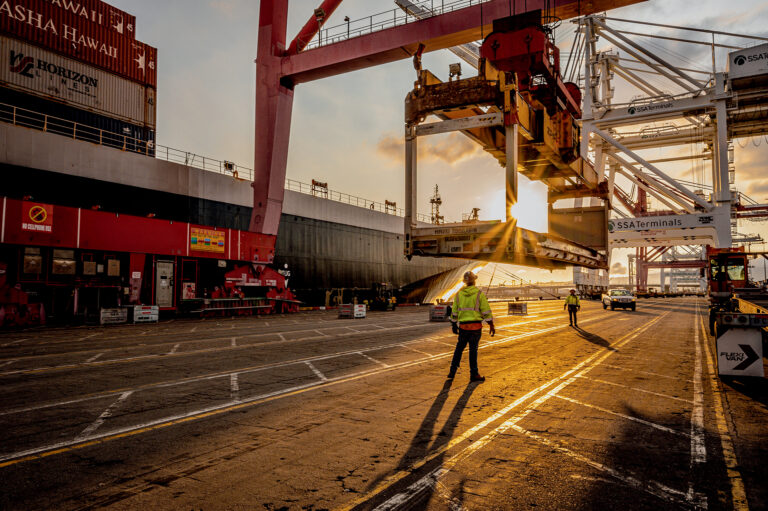

Pasha Hawaii, the second-largest cargo shipper connecting Hawai‘i to the West Coast, announced in November that one of its vessels can now use shore power when it docks at the Port of San Diego.
Pasha Hawaii’s MV Jean Anne — a roll-on/roll-off (ro/ro) containership — did not burn heavy fuel for electric power when it recently berthed at the port.
The ship can now draw power from the port’s electrical grid instead.
According to Pasha Hawaii’s November press release, “Shore power allows vessels to plug into the local electrical grid rather than relying on diesel power while at berth.” This reduces toxins released by diesel and other heavy fuels as they burn.
Matson Inc., the state’s largest carrier, Pasha Hawaii and Young Brothers LLC are revamping their ocean fleets amid the current global push to replace heavy fuels with cleaner alternatives like liquified natural gas (LNG).
However, even most LNG-equipped vessels burn diesel and other heavy fuels while docking at ports without shore power. This includes most ports in the state of Hawai‘i.
Hawai‘i’s New High-Tech Harbor
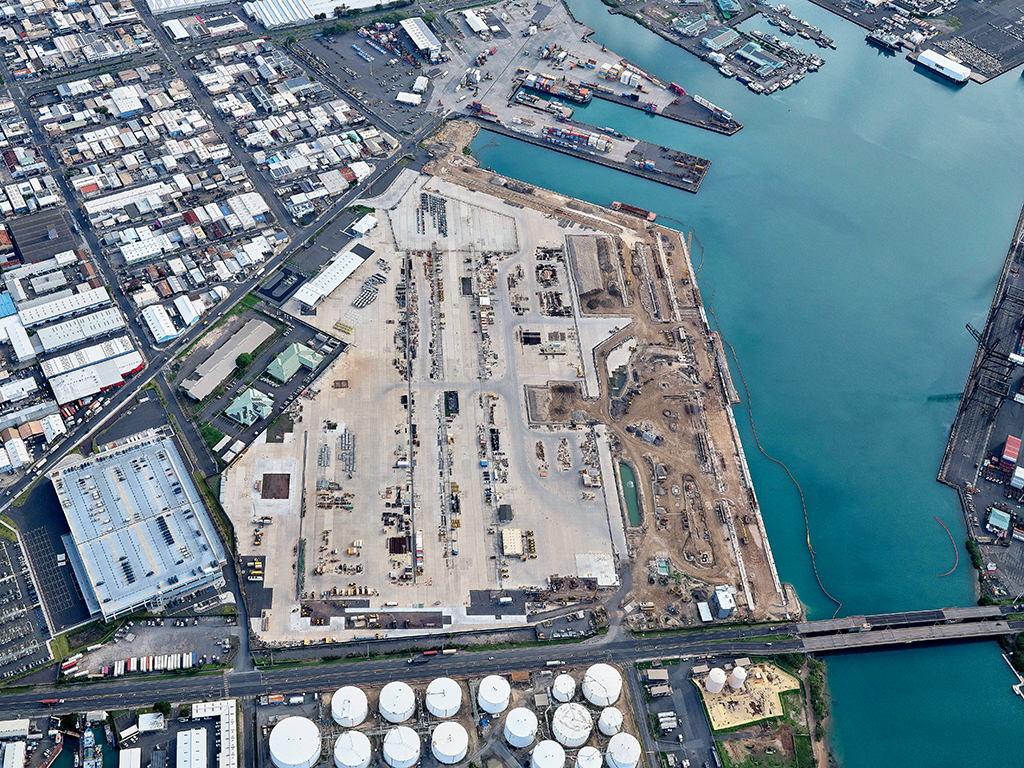
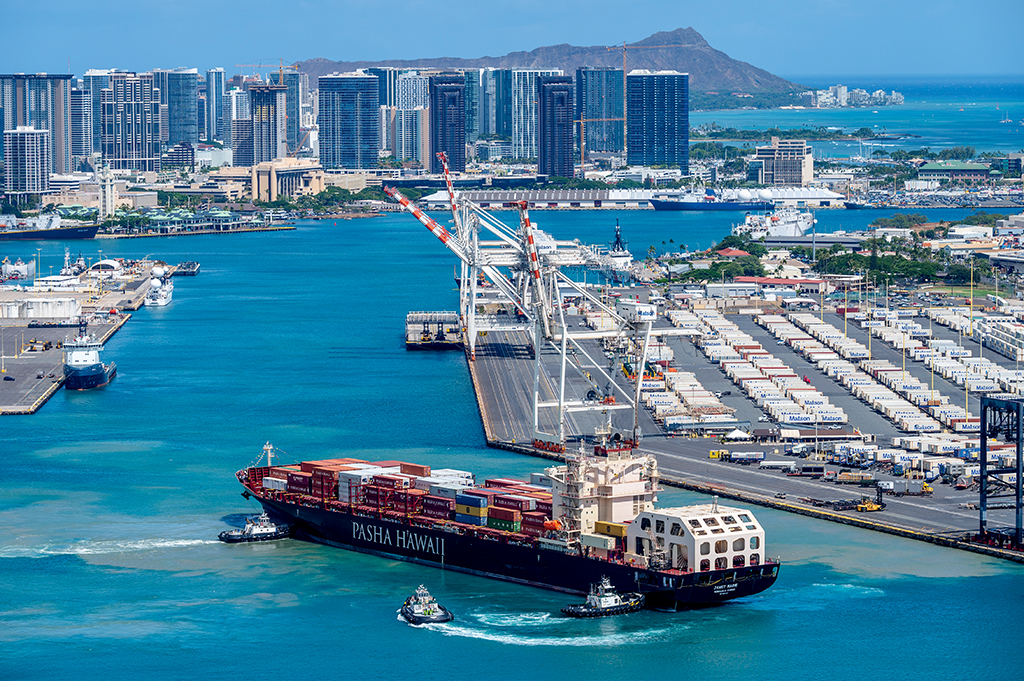
The Hawaii Department of Transportation (HDOT) is currently wrapping up work on Kapalama Container Terminal (KCT), the sprawling Honolulu Harbor facility that processes most cargo shipped in and out of the state.
Construction is expected to be complete and terminal operations to begin by the end of this year.
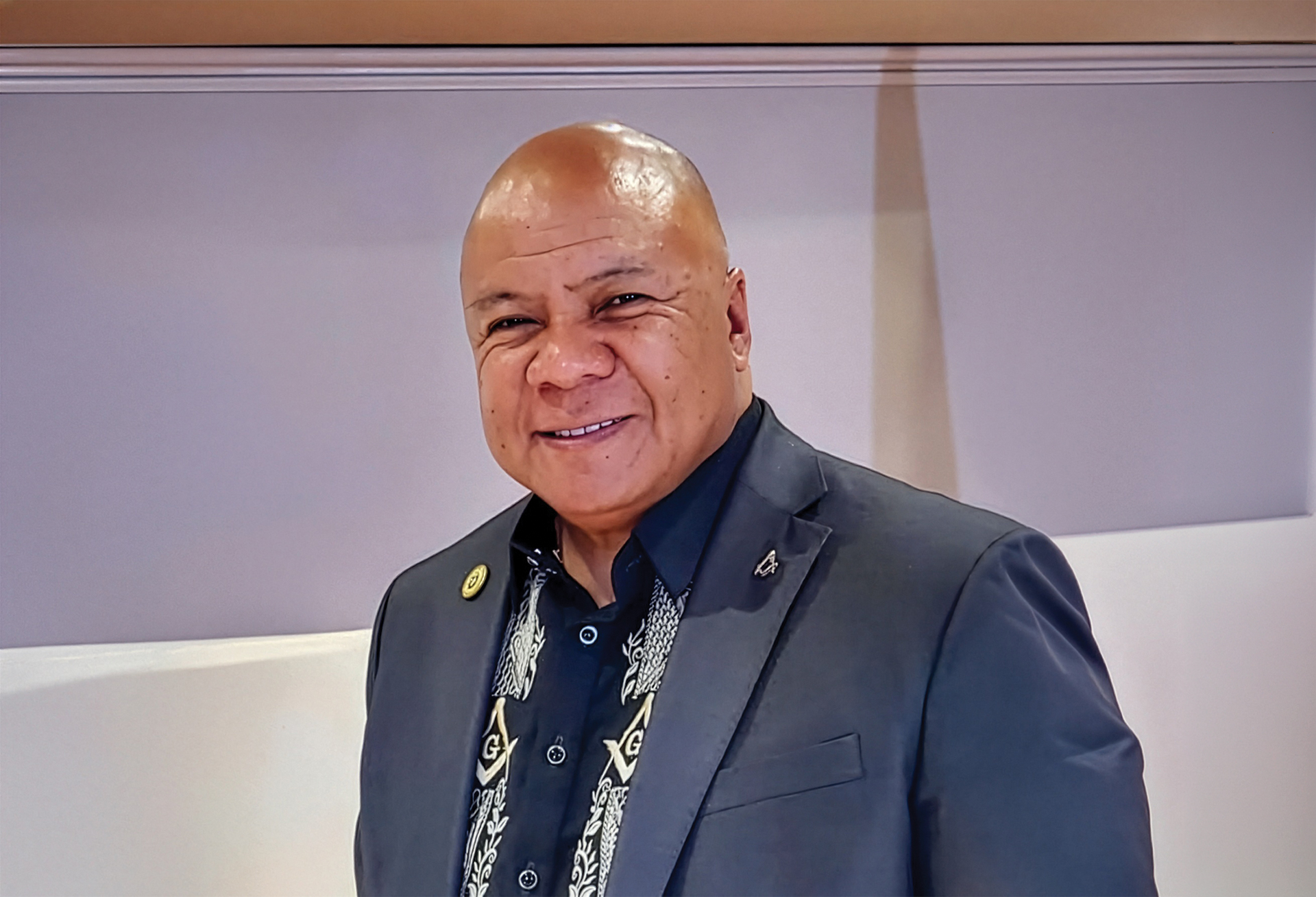
Dre Kalili
In KCT’s final phase of construction, “we will see the completion of the rail beams and rails to support the gantry cranes expected to be delivered in August, concrete paving and striping in the yard, erection of high-mast lighting and installation and energization of the electric substations and switchboards to support the facility,” says Dre Kalili, HDOT deputy director of transportation for harbors.
On KCT’s waterside, she says, “we will see the completion of the wharf by early summer.” This includes final dredging of berth space.
KCT’s new terminal has two standout features that will benefit cargo operations, Kalili says.
“The first is the raised height of the wharf which is about three feet higher than the other facilities in Honolulu Harbor. This forward-thinking in the design means this terminal will be resilient to changing ocean conditions for generations to come,” she says.
The second is the inter-connection between KCT and Young Brothers’ inter-island barge terminal next door at Piers 39/40.
“Each week, more than 1,000 containers bound for the neighbor islands are transferred by truck from Sand Island over Nimitz Highway to Piers 39/40,” Kalili says. “Most of this cargo will now move directly between the two terminals. We expect to see reduced congestion on the roadways around Honolulu Harbor as a result.”
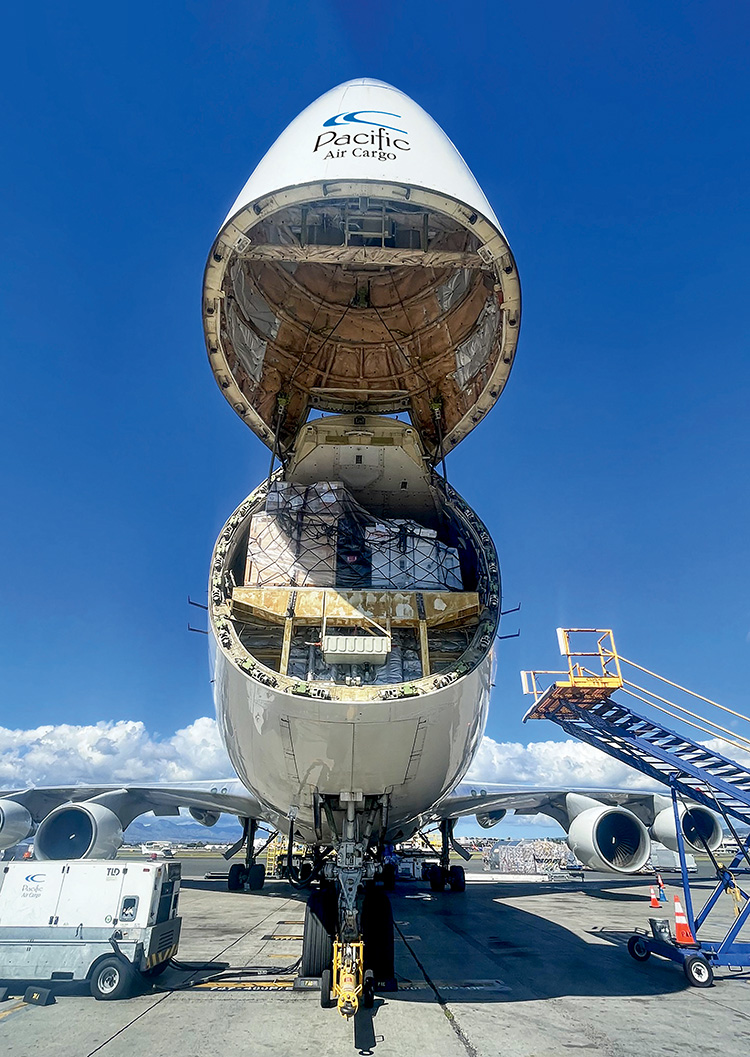
Pacific Air Cargo’s B747-400 delivers oversize construction freight overnight.
PHOTO COURTESY PACIFIC AIR CARGO
Industry Air Lifts on the Rise
Paul Skellon, Pacific Air Cargo (PAC) director of marketing, communications and public relations, says the air freight company is seeing “a steady and significant growth of building and construction materials and equipment over the past year, as time plays an increasing role in the supply chain efficiency to Hawai‘i.”
He says PAC offers the largest daily scheduled lift capacity between Los Angeles and Honolulu with B747-400 nose-loader aircraft for oversize construction shipments such as crane segments, girders, wind turbines and more.
PAC delivers urgently needed last-minute construction freight with a daily overnight service out of Los Angeles to Honolulu, and offers weekly services to Pago Pago and Guam, as well as ad hoc charter operations throughout the Pacific.
Skellon says PAC expects its Hawai‘i market momentum to continue in 2026.
Hawai‘i’s Push for More Power
KCT’s completed terminal will also likely explore some of the “green” energy strategies recommended in HDOT’s “Hawai‘i Energy Security and Waste Reduction Plan.”
Published in October 2025, the plan details how the state aims to increase shoreside power and reduce emissions in Hawai‘i’s maritime transportation sector for the next 20 years.
Current strategies by KCT stakeholders include battery energy storage, off-grid capability and a self-contained microgrid using power generated from electric cranes.
“Once operational, KCT will be the state’s most efficient terminal and a model for other commercial ports,” says George Pasha IV, president and CEO of Pasha Hawaii, which delivers cargo to the islands via an LNG-powered fleet as well as with containerships such as MV Jean Anne that recently switched to shore power in San Diego.
But for now, shore power to fuel ships that dock at KCT and other Hawaii ports is not an option, says Mark B. Glick, Hawai‘i State Energy Office chief energy officer.
“Shore power … has been historically inhibited by inadequate power and interconnection capacity to handle large variable shore power needs of the shipping industry,” Glick says.
However, current efforts by the Green Administration to improve power plant efficiency and capacity “are expected to significantly improve shore power capacity by 2030,” Glick continues. “Such efforts would be aided by access to natural gas, renewable natural gas and hydrogen for use in fuel cells to produce electricity onsite for shore power. The Hawai‘i State Energy Office is also working with HDOT Harbors [Division] on plans to introduce hydrogen for port operations, such as forklifts and cranes.”
Meanwhile, Hawai‘i’s leading carriers are converting their ocean vessels to all-LNG or dual-capacity engines and revamping their own terminals at Honolulu Harbor and KCT.
Matson Inc.
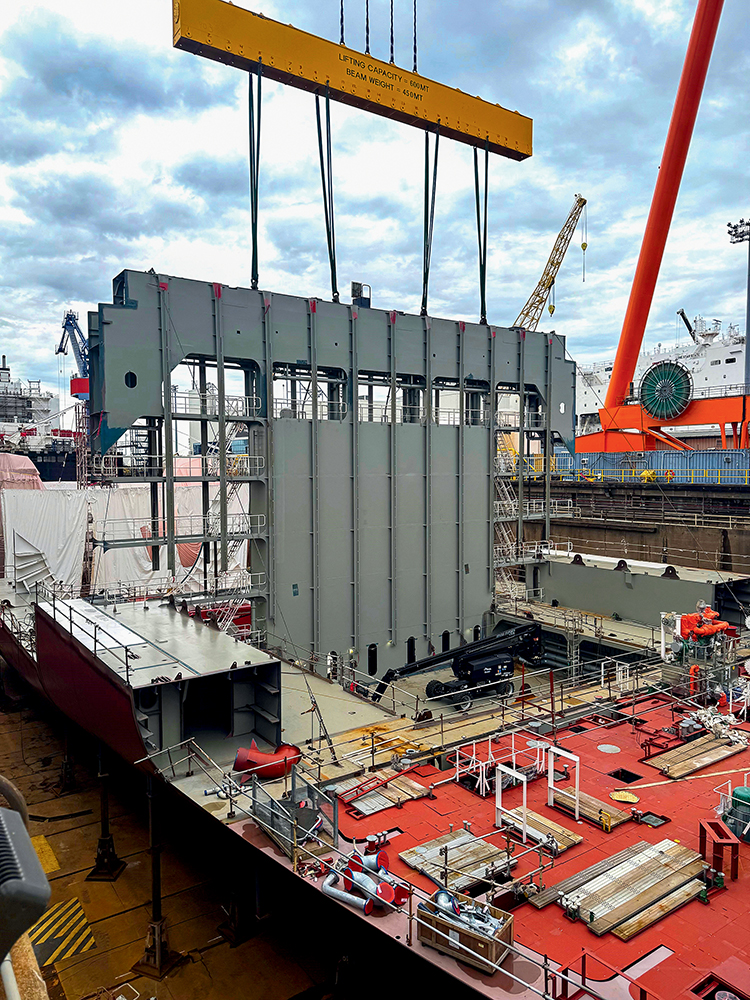
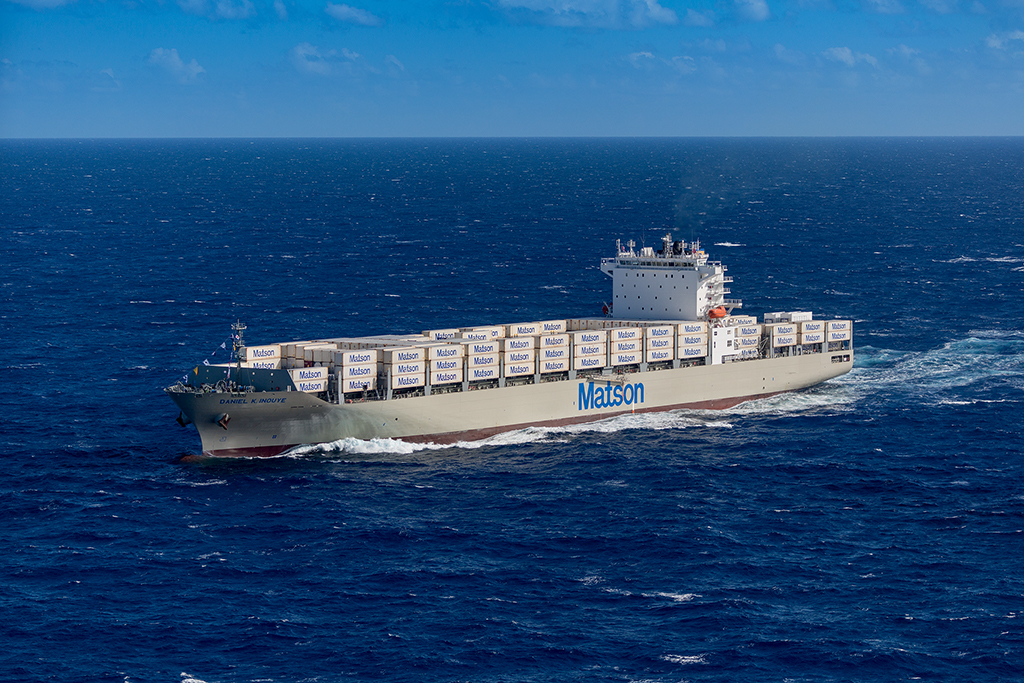
Makua, Matson’s next Aloha Class containership and one of three currently under construction at Hanwha Philly Shipyard, is slated for Hawai‘i delivery in Q1 2027.
New sister containerships Malama and Makena will follow in late 2027 and early 2028, respectively. All three new containerships will have dual-capacity engines that can run on both conventional marine fuels and LNG.
They will also advance Matson’s current corporate carbon reduction goals — a 40-percent reduction in greenhouse gas emissions (GHG) by 2030 and net-zero GHG emissions by 2050.
Matson is also investing more than $60 million as it modernizes its Sand Island Terminal in a multi-phase program.
“Portions of the program are already complete, including the installation of modernized cranes,” says Len Isotoff, Matson senior vice president, Pacific and executive vice president, Matson Terminals. “Other projects within the terminal modernization program, including power and resiliency upgrades and gate and terminal expansion, are in various stages of planning and coordination, with no groundbreaking date set at this time.
“We continue to work with [HDOT] Harbors on this project.”
Pasha Hawaii
In 2025–2026, Pasha Hawaii is implementing comprehensive ocean fleet and Hawai‘i landside sustainability initiatives.
These include repowering ocean vessels for dual-fuel diesel and LNG capability and using shore power whenever available.
Once the carrier’s new KCT terminal opens for business later this year or next, new energy-efficient gantry cranes will reduce fuel and power consumption through electrical regeneration, says George Pasha IV. “Additional projects include a 1.5 megawatt solar array, a 3.8 megawatt-hour crane battery energy storage system, a 7.6 megawatt-hour terminal storage system and a dedicated KCT microgrid.
“For the first time ever,” he stresses, “Pasha Hawaii and Hawaii Stevedores Inc. has partnered with [Hawaiian Electric Co. and worked with HDOT’s Harbors Division] to design and construct a modern container terminal … equipped with capabilities to provide enough power to the cranes when the threat of a natural disaster takes the city’s power grid offline.
“This means Pasha Hawaii and Hawaii Stevedores will still be able to discharge and load vessels, ensuring Hawai‘i’s supply chain remains uninterrupted.”
PHOTO COURTESY YOUNG BROTHERS LLC
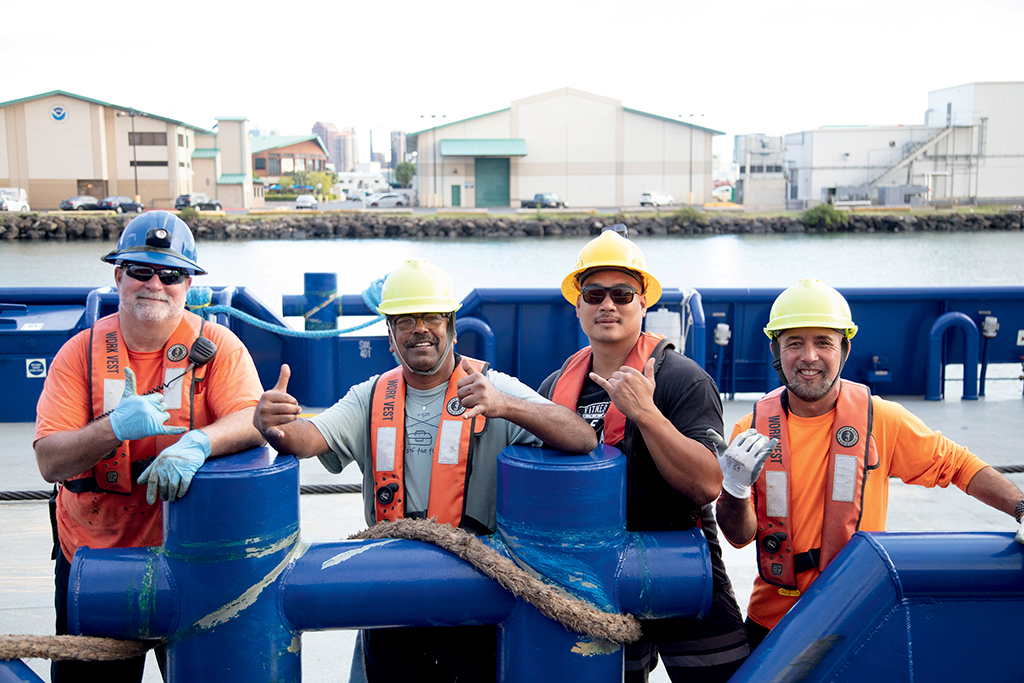
Young Brothers LLC
Young Brothers opened a promising new year by welcoming Steen Christensen as its new president and by earlier submitting a Dec. 17, 2025 letter to the Public Utilities Commission (PUC) outlining a high-level overview of its 2026 initiatives.
The letter details conditions Young Brothers will meet as part of the PUC’s approval of the interisland carrier’s 25.75-percent shipping rate increase that took effect Jan. 1.
PHOTO COURTESY YOUNG BROTHERS LLC
Chris Martin

“This increase replaces, rather than adds to, the temporary 2025 18.1-percent rate increase which ended Dec. 31, 2025,” says Chris Martin, the company’s vice president of operations.
Young Brothers continues operating newer, more efficient vessels, Martin says, and is evaluating shore power infrastructure, alternative fuels and emerging technologies to reduce emissions over time.
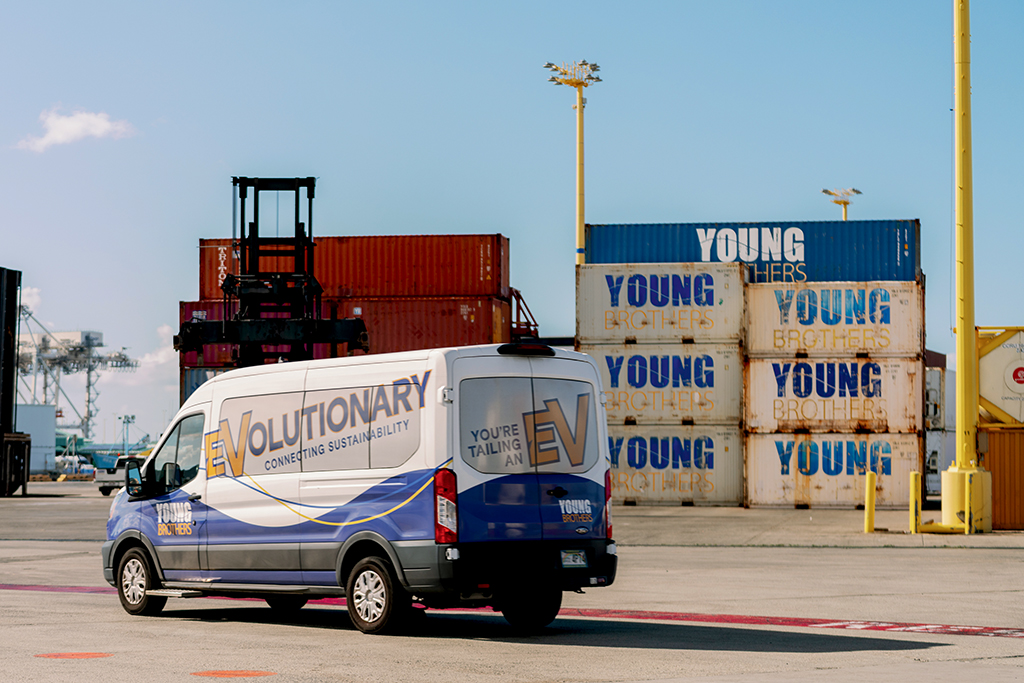
This includes “approximately $14 million invested in electric vehicles and charging infrastructure, significantly improving efficiency and reducing emissions across the company’s shoreside fleet,” he says.
Along with similar efforts by Matson and Pasha Hawaii, Martin says “this work builds on initiatives already underway and reflects an ongoing focus on meeting Hawai‘i’s evolving supply chain needs through coordination with island communities, regulators and state leaders.”