


Big Digs
Honolulu’s transformation into a world-class metropolis starts with infrastructure — and there’s a lot of it underway
Utility relocation projects are clearing the way for the future Skyline Hōlau Station, shown here.     RENDERING COURTESY Honolulu Authority for Rapid Transportation
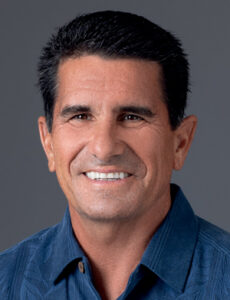
Nathaniel Kinney

In Building Industry Hawai‘i’s August 2025 issue, a $1.7-billion bid on a roadway project appeared in very small text in the magazine’s “Low Bids” section.

Like current mentions of infrastructure projects planned for the New Aloha Stadium Entertainment District (NASED) and Kūwili Station redevelopment, the significance of these projects can be easily overlooked.

But not by local construction experts like Pacific Resource Partnership (PRP) and the General Contractors Association  (GCA) of Hawaii.

Nathaniel Kinney, PRP executive director, says “the infrastructure upgrades for the NASED and Kūwili Station TOD Redevelopment Area are extensive, encompassing new sewers, potable water systems, electrical grids, roads and walking and biking paths.”

The estimated cost, Kinney says, “is in the hundreds of millions of dollars.”

Cheryl Walthall

New NASED and Kūwili Station Syste
Cheryl Walthall, GCA of Hawaii executive director, says the NASED build-out alone “has an expansive scope that consists of the demolition of the existing Aloha Stadium, the design, construction, operation and maintenance of a new, 25,000-seat multi-use stadium and the development of the surrounding area for housing, retail space and hotel accommodations.”

All told, Walthall says, the NASED project — including new infrastructure — is expected to generate more than $2 billion in construction spending, 12,000 construction jobs and $600 million in construction wages.

Similarly, the City and County of Honolulu’s upcoming Kūwili Station TOD (Transit Oriented Development) Redevelopment Area master plan will reshape the future Iwilei rail station and surrounding neighborhood into a dynamic, mixed-use community.

According to a City July 7 press release, “master-planning efforts will focus on … aligning infrastructure investments to support future housing, flood mitigation and broader development in the area.”

The City just wrapped up its request for proposal for a coordinated TOD and infrastructure investment program, Walthall reports, “so it is too early to know the potential value of the project.”

Skyline Systems Advance

The City Center Guideways and Stations (CCGS) project is extending Skyline from Middle Street into Kaka‘ako. CCGS contractor Tutor Perini Corp. will begin building the new guideway this summer and follow with station construction.

The project’s visible success is matched by ongoing utility upgrades — all mostly hidden from view.

These include moving storm drainage facilities, sewer mains, water mains, gas/fuel lines, electrical and communications infrastructure and relocating overhead utilities underground.

As of Sept. 1, says Vance Tsuda, Honolulu Authority for Rapid Transportation (HART) project director, the bulk of CCGS utility relocations from Kaaahi Street through Nimitz Highway and in the area of Halekauwila Street are complete. Remaining work is scheduled to be finished in early September.

Utility relocation along Dillingham Boulevard is ongoing and expected to be completed — along with all other CCGS utility relocations — in mid-2026.

A crew in a micro-tunneling pit installs conduit that will run electrical utility lines beneath Kapālama Stream.      PHOTO COURTESY HONOLULU AUTHORITY FOR RAPID TRANSPORTATION

Nan Inc., Hawaiian Crane & Rigging Ltd. Go the Extra Mile

Nan Inc. and Hawaiian Crane & Rigging Ltd. (HCR) are contracted for some of HART’s most challenging utility work.

Nan Inc. uses micro-tunneling, “a tunnel-boring machine to trench underneath the stream between Kokea and Kohou [streets],” says Project Manager Brian Shin.

“The largest challenge by far was encountering extremely old and unforeseen conditions underneath the [HART project] area,” he says. “Some things date back to the early 1900s when drawings were all hand-drawn.”

Project crews also hit water three feet below street level in some areas.

“Numerous trenches were over 25 feet deep and some nearly 30 feet deep and would not be possible without [Nan Inc.’s] deep soil-mixing and jet-grouting methods,” Shin reports.

“By Sept. 1, we expect to have over 90 percent of the underground work completed,” he says.

Hawaiian Crane & Rigging Ltd. crane lands a 70-foot-long traction power substation for guideway installation.      PHOTO COURTESY HAWAIIAN CRANE & RIGGING LTD.

Kerwin Chong

Tight quarters aren’t stopping HCR either as it installs traction power substations (TPSS) at street level.

TPSS convert incoming electrical power into usable voltage for the Skyline system.

HCR is installing 70-foot-long TPSS on raised slabs with “sometimes only three feet of headroom clearance between the top of the TPSS and the bottom of the elevated guideway,” says Kerwin Chong, HCR vice president.

HCR has created a low-profile hydraulic skating system for this task. Once landed by two 300-ton hydraulic cranes, HCR skates the TPSS within a 1/8-foot tolerance underneath the guideway. “To date, HCR has installed nine of these units,” Chong notes.

Hensel Phelps continues construction on the $517-million Honouliuli Wastewater Treatment Plant Phase 1C project, including building structural walls.     PHOTO COURTESY HENSEL PHELPS

New Wastewater Systems

General contractor Hensel Phelps has three major O‘ahu wastewater treatment plant projects currently underway, with a fourth completed in May this year.

One of these, the $517-million Honouliuli Wastewater Treatment Plant Phase 1C – Headworks, High-Rate Biological Contactor (HRBC) Solids Process and Miscellaneous Improvements project, may set the bar for Hawai‘i’s future treatment plants.

Jonathan Tseu

Tight quarters aren’t stopping HCR either as it installs traction power substations (TPSS) at street level.

TPSS convert incoming electrical power into usable voltage for the Skyline system.

HCR is installing 70-foot-long TPSS on raised slabs with “sometimes only three feet of headroom clearance between the top of the TPSS and the bottom of the elevated guideway,” says Kerwin Chong, HCR vice president.

HCR has created a low-profile hydraulic skating system for this task. Once landed by two 300-ton hydraulic cranes, HCR skates the TPSS within a 1/8-foot tolerance underneath the guideway. “To date, HCR has installed nine of these units,” Chong notes.

Nan Inc.’s new covered walkway at Kona’s international airport incorporates traditional Hawai‘i motifs.     PHOTO COURTESY NAN INC.

Airport System Upgrades

Tim Oshima

Nan Inc. Project Manager Tim Oshima says the general contractor’s current Ticket Lobby Renovations and Baggage Handling Systems Improvements – Phase 2 project at Daniel K. Inouye International Airport has successfully installed new handling systems in Terminal 1 and is installing new ones at Terminal 2.

The project also provides for Terminal 2 renovations. Lobby 4 is complete, Lobby 6 is currently under construction and Lobby 5 is coming up.

The new baggage handling systems are the project’s most important focus, Oshima says. “It is an integral airport function to screen baggage for explosives and weapons [and] send and sort baggage … for daily flight departure operations.”

At Ellison Onizuka Kona International Airport at Keahole on the Big Island, Nan Inc.’s Restroom Improvements and New Covered Walkway project is “in the closeout phase,” reports Project Engineer Russell Transfiguracion.

Transfiguracion says key facility enhancements include “motion sensor-driven utilities … and a modern take on the Kona Airport experience.”

The $11.8-million project is expected to wrap in August.

Transfiguracion says the project’s new covered walkway highlights “the thoughtful design that blends durability with visual appeal,” modernizing and beautifying Kona Airport while providing extra shade to passengers in the Kona heat.

Copahee Avenue in Kalaeloa (at center right above) may open early next year following Hunt Companies Hawai‘i’s extensive upgrades.    PHOTO COURTESY HUNT COS. HAWAI‘I/GOODFELLOW BROS.

New West O‘ahu Grids

Steve Colón

Kellie Caswell

“Hunt Companies Hawai‘i continues to prioritize the completion of a $40- million upgrade to a section of Kalaeloa Town’s roadways,” says Steve Colón, president at Hunt Companies Hawai‘i.

Copahee Avenue construction improvements — roadway upgrades and sidewalk and street lighting installation — are now complete. The avenue now meets current City and County of Honolulu standards.

  “Hunt is optimistic that the City will officially accept the construction improvements before the end of 2025,” Colon says. This will allow the avenue to open, possibly in early 2026.

Kellie Caswell, James Campbell Co. development and construction manager, says the company “continues to make progress on several major infrastructure upgrades at Kapolei Harborside, including the completion of State Harbor Access Road Phase 1B.”

When complete, the new state highway will serve as a second route linking the H-1 Freeway directly to Kapolei Harborside and Kalaeloa Harbor.

The company has begun mass grading on two additional phases, which will
prepare over 100 acres of land for new
industrial development, as well as starting
construction on Building 2, a 90,400-
square-foot Class A industrial building.

“The James Campbell Company’s large investment in major infrastructure upgrades at Kapolei Harborside will unlock over 2.5-million square feet of new industrial space,” Caswell observes, “and will support a wide range of logistics, distribution and light manufacturing users.”

About That (Low Bids) Sleeper …

The $1.7-billion bid mentioned at the start of this article was for a project entitled “Asphalt Pavement Preservation, Resurfacing and Reconstruction at Various Locations, Island of Hawaii.”

Descriptive alt text

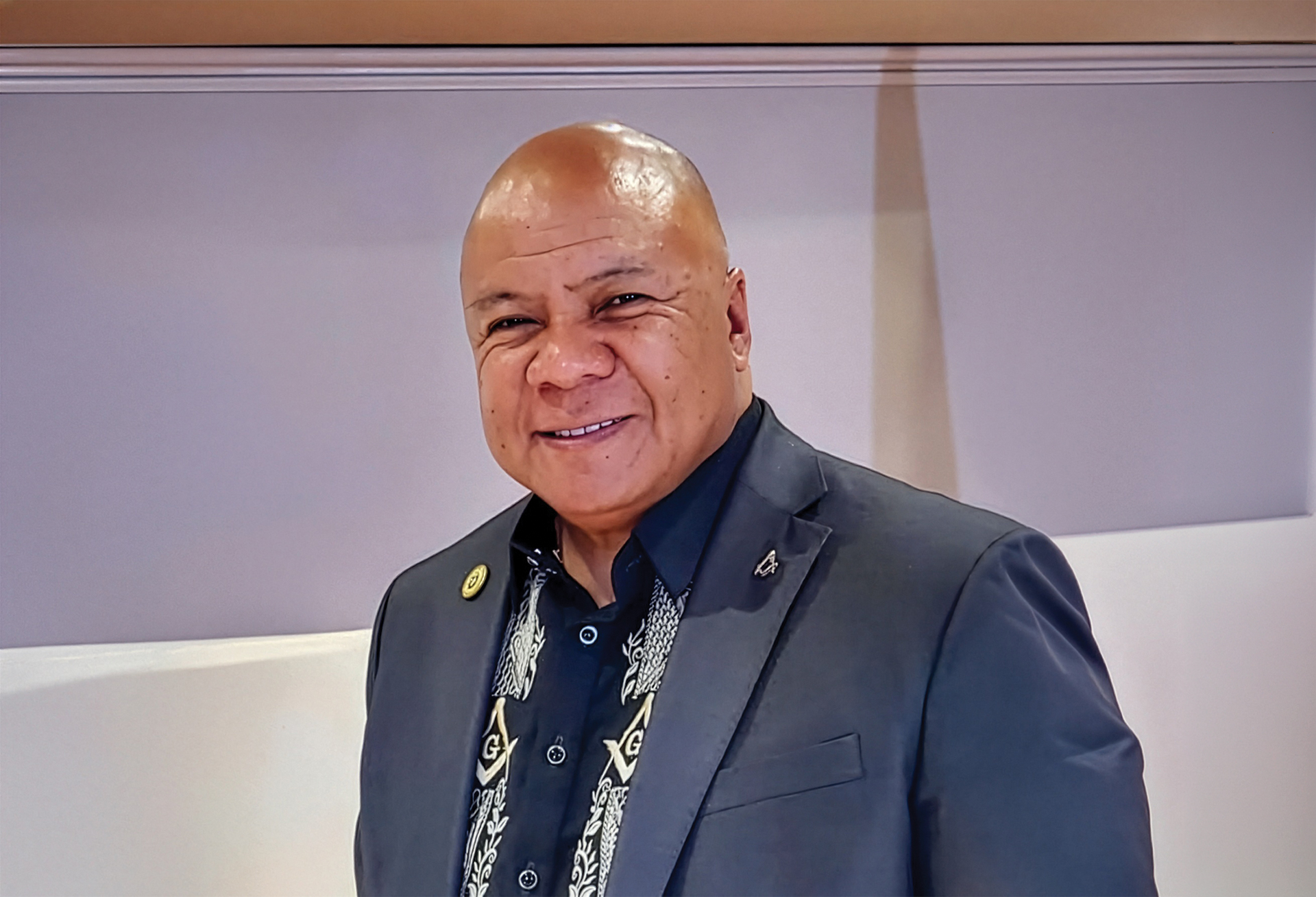
Ed Sniffen

Twenty percent of the project’s funding is supplied by the state and 80 percent by the federal government.

The project’s expected start date is Sept. 22, 2025, and expected wrap date is September 2030.

Hawai‘i Department of Transportation Director Ed Sniffen says the “contract time is 12 months from Notice to Proceed, with an option to extend four additional 12-month periods upon mutual agreement.”

Pretty substantial — and a solid indication of Hawai‘i’s massive new infrastructure projects going forward.


The Kelikai team inspects the grouting process of an augered cast-in-place piling.     PHOTO COURTESY KELIKAI INC.

Machines That Make the Cut

Hawai‘i’s major infrastructure projects need top-notch equipment to get the job done. Below, Hawai‘i’s leading vendors and contractors name their top infrastructure performers:

Hawthorne Cat

“Cat excavators, wheel loaders, track-type tractors and generators play a key role in Hawai‘i’s infrastructure and building projects,” says Parker Paredes, Hawthorne Cat machine sales manager – Pacific Region. “Seldom will you find any large jobsite here in Hawai‘i that is not powered by Cat in some shape or form.”

Bacon Universal

At Hawai‘i’s current infrastructure projects, “telehandlers and boom lifts are an essential tool for getting work done efficiently and accurately,” says Matt Elvin, Bacon Universal president and CEO. “Mid- to large-size excavators are also in high demand, such as the Komatsu PC138USLC-11,” which features a short implement swing radius and is built for working in confined spaces like roadways, bridges or urban areas.

Kelikai Inc.

Kelikai’s Bauer MC128 “is the only drill rig in the state capable of installing 36-inch-diameter by 100-foot-deep auger cast-in-place piles,” says Kelikai Inc. President Damien Enright. Kelikai’s drill rig is installing these pilings at a top Hensel Phelps Sand Island wastewater treatment plant project.

Hawaiian Crane & Rigging Ltd. (HCR)

“HCR is involved with about 80 percent of all the new Hawai‘i infrastructure projects,” says HCR Vice President Kerwin Chong. Three of HCR’s 275-ton Manitowoc 999 crawlers are onsite at the Pearl Harbor Naval Shipyard Dry Dock 5 project.

Related Images:

More articles