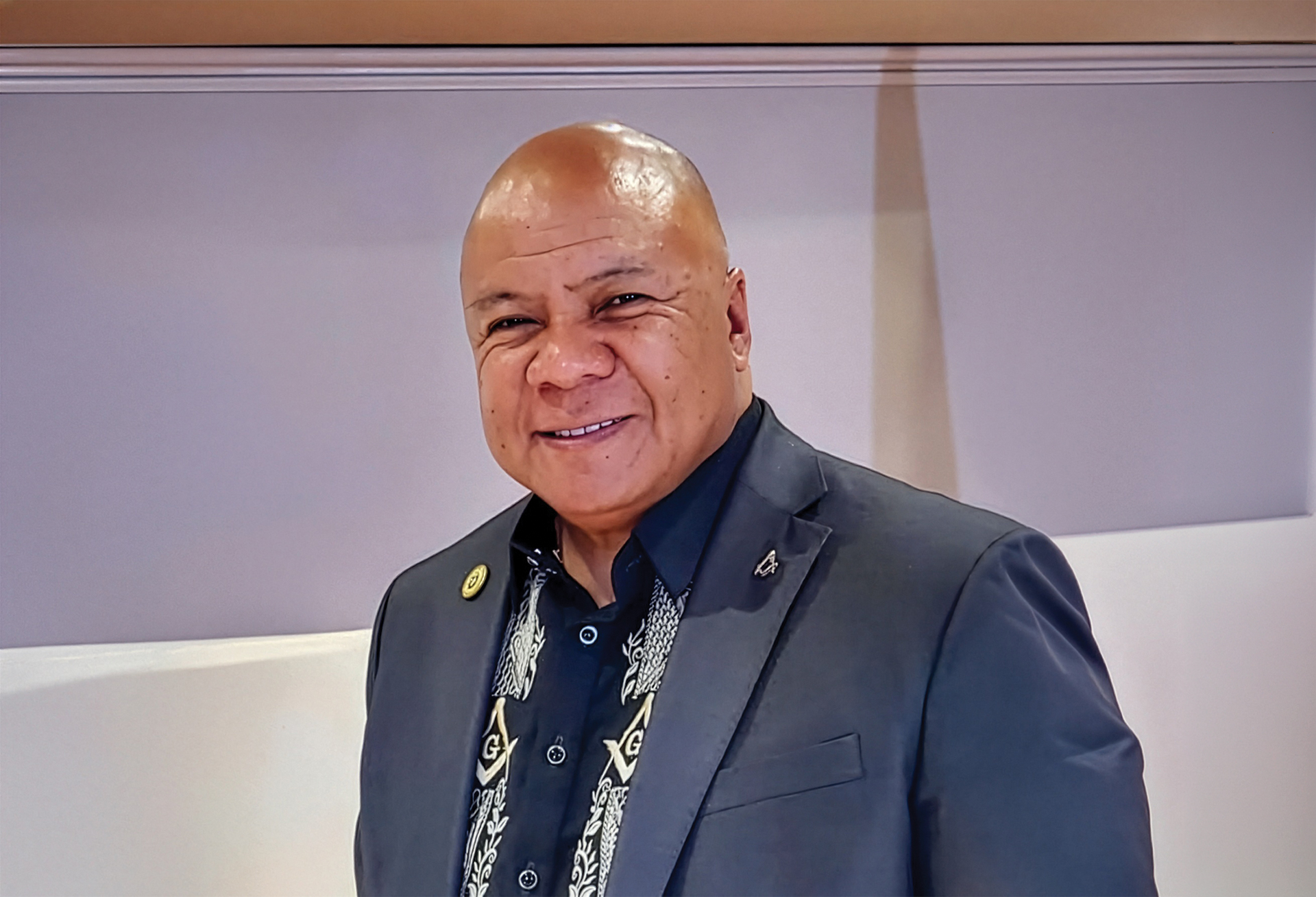

Although 2025 presented economic and global challenges, “Hawai‘i’s construction industry remains strong and continues to be one of the more stable drivers in our local economy,” reassures Michael Inouye, 2026 General Contractors Association (GCA) of Hawaii president.
“We have major work moving forward including long-term public investments like rail and the stadium, and we continue to see consistent demand in both the public and private markets,” he adds.
As Michael takes the helm from GCA of Hawaii 2025 President Russell Inouye, his focus will be on labor shortages, “high-quality” training and education and mental health.
“Michael will lead GCA in 2026 at a time when the industry remains busy, but the challenges facing our members continue to require steady, solutions-focused leadership,” says Cheryl Walthall, GCA of Hawaii executive director.
STAYING AHEAD
Even with this positive outlook for 2026, Inouye says “it would be unrealistic to ignore the headwinds,” such as tariffs, supply-chain volatility and global uncertainty.
Walthall agrees, warning that uneven abilities to absorb material price escalations between contractors and public agencies could force contractors to absorb additional costs at unpredictable rates, especially for publicly-funded work.
Inouye believes proactive planning and more-involved collaboration between all entities is the best approach.
“That environment requires a higher level of planning and coordination, not only from contractors, but from owners and designers as well,” he says. “The projects that move forward successfully will be the ones built on early collaboration and practical solutions.”
Inouye is also pushing for increased preparation on technological developments, such as artificial intelligence, robotics, drones and digital tools.
“These aren’t future concepts anymore; they’re becoming standard practice, and GCA should help ensure our members are equipped to use them effectively,” he stresses.
“Our members are operating in a tight labor market, and the long-term health of our industry depends on investing in people at every level.”
Michael Inouye
ADVOCATING FOR THE NEXT GENERATION
Inouye plans to perpetuate the emphasis on workforce development, especially as federal budget cuts have caused early retirement for many construction workers.
“The reduction in the federal government workforce has accelerated retirements among seasoned professionals, resulting in fewer experienced individuals available to manage and oversee complex projects,” says Walthall. “That shift can slow decision-making and approvals, increase administrative hurdles and create challenges for contractors working hard to keep schedules on track.”
Connecting with young people, Inouye says, has been one of his more meaningful experiences, citing their “energy, curiosity and ambition” as inspiration for his dedication to building up the next generation of industry workers.
Inouye is continuing to invest efforts in the GCA Education Foundation, focusing on not just the incoming workforce, but workers at all levels.
“Our members are operating in a tight labor market, and the long-term health of our industry depends on investing in people at every level,” he says.

IMPROVING FROM THE INSIDE OUT
As always, the GCA is falling back on its foundational goal of supporting its membership for 2026, aiming to provide additional resources and tighten internal operations. Walthall shares they’re “moving forward with a Governance Task Force” to conduct a comprehensive review of the GCA’s governance structure.
“This work is important — it ensures we’re positioned for long-term success and that our systems, policies and leadership structure are aligned with where the industry is headed, not just where it has been,” she says.
The GCA is also shifting focus to The Inside Track, a monthly membership and networking meeting “designed to give members a consistent opportunity to connect and share insights with key leaders to stay informed and build relationships across the industry,” Walthall describes.
Walthall also expresses her desire to get less-engaged members more involved with the GCA again, setting a personal goal to reach out “more intentionally” and see how the association can better support them.
“The truth is, construction has always been about navigating challenges. Whether it’s COVID, severe weather, global conflict or economic disruption, we adapt and we keep moving forward.”
Michael Inouye
BROADENING PERSPECTIVE
Regardless of market volatility and general uncertainty, Inouye steps into his new role with confidence. He feels well-supported by the association’s members and staff and is reassured by how the local industry has handled unpredictable events in the past.
“… The truth is, construction has always been about navigating challenges,” says Inouye. “Whether it’s COVID, severe weather, global conflict or economic disruption, we adapt and we keep moving forward. The difference today is that those challenges can change week-to-week, so it becomes even more important for owners, designers and contractors to stay aligned and communicate early.”
Inouye’s time as vice president has also thoroughly prepared him for the role, noting that national conferences and the larger Associated General Contractors of America network has helped him gain a “broader perspective.”
“… I’ve seen that while every market is unique, many of the challenges are shared: workforce shortages, cost escalation, policy changes and procurement issues that can complicate project delivery,” he says. “That experience has been valuable because it’s shown me both what’s working in other places and what resources are available to help our members here. The key is taking those ideas and adapting them in a way that makes sense for Hawai‘i.”
For Inouye, that’s what being GCA of Hawaii president is all about — the people.
“Being president gives me the chance to help support them and help strengthen the relationships that make this organization and this industry successful,” he concludes.