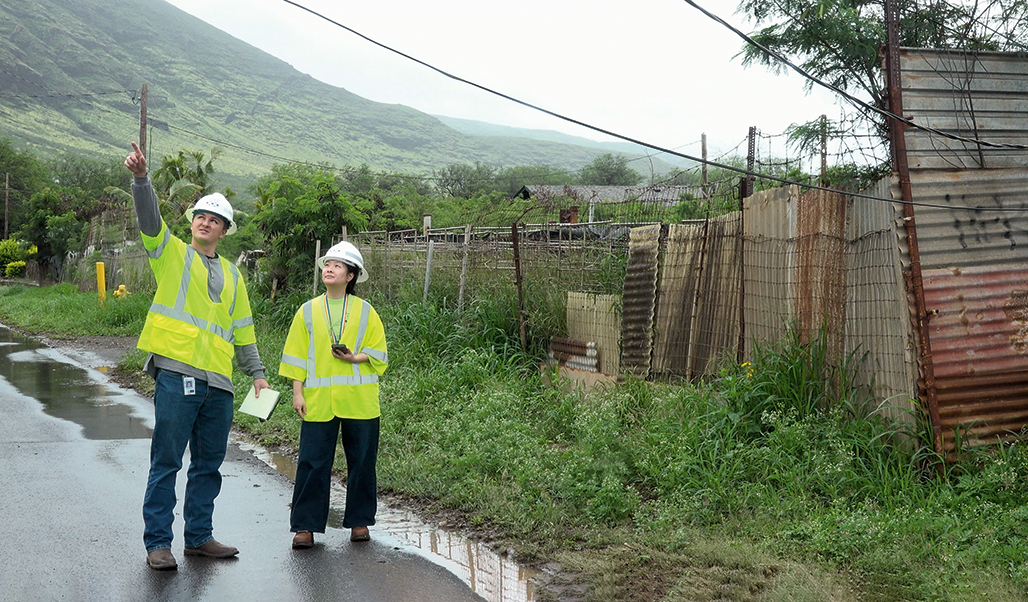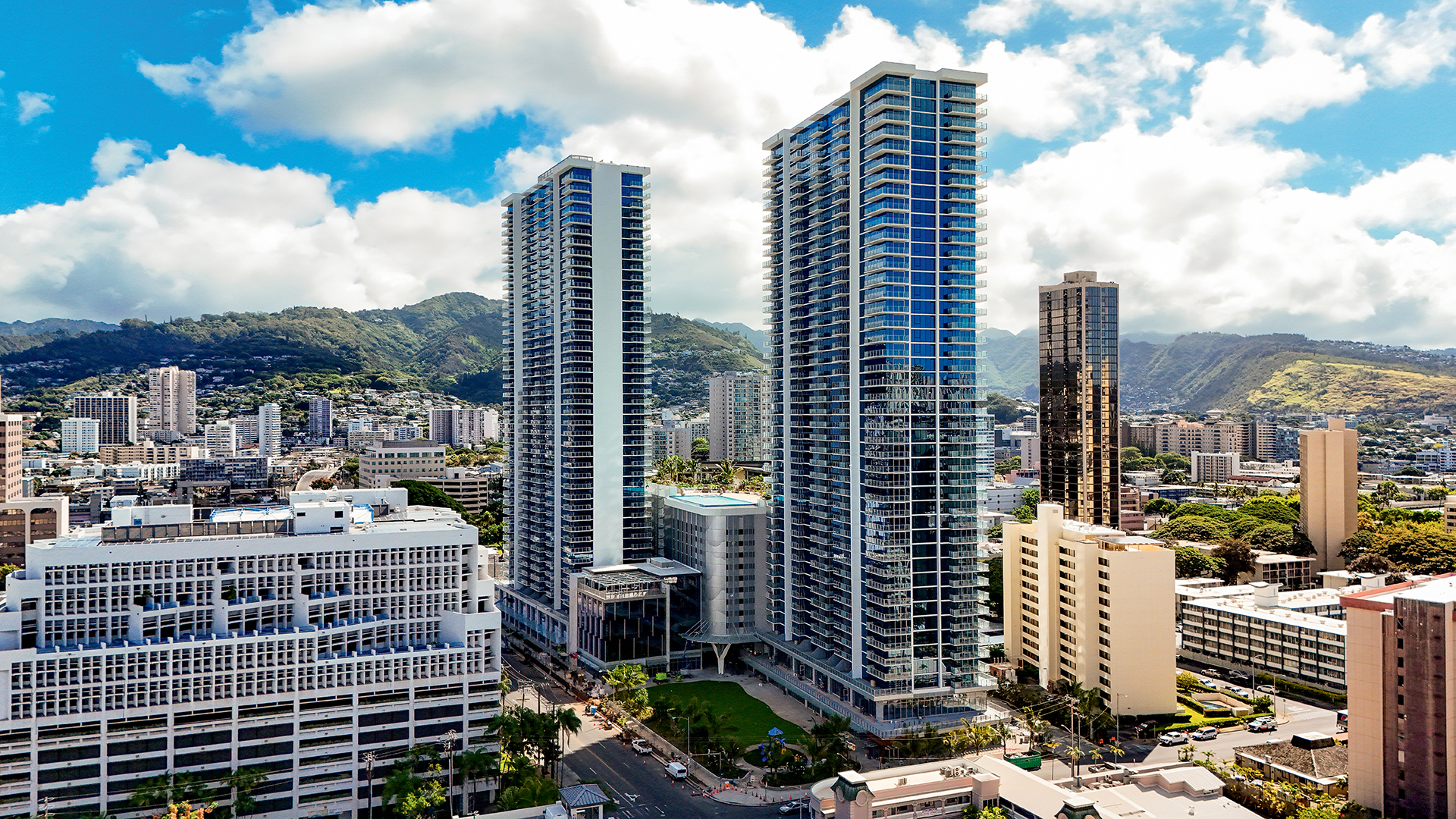

It is no secret that the Hawaiian islands are facing the threat of sea-level rise and possible submersion. O‘ahu in particular is beginning to see the major effects of this as its concentration of commercial and industrial development is ramping up the issue.
One area of O‘ahu in particular, the Mapunapuna area located in the Moanalua ahupua‘a, has garnered the attention of researchers for its increasing flooding issues.
“Much of [Mapunapuna] is built on artificial fill that can be over 10 meters thick. This fill is a heterogeneous mix of materials, including soil, rocks, trash and organic matter, which was often dumped without proper compaction,” Kyle Murray, University of Hawai‘i (UH) at Mānoa School of Ocean and Earth Science and Technology (SOEST) research scientist, says. “Over time, these materials compress and decompose, causing the land to sink, which can be exacerbated by hydrological processes. This sinking, or subsidence, effectively lowers the ground elevation, making the area more vulnerable to coastal flooding from sea-level rise.”
Completely repairing the area would require disrupting the existing infrastructure that has been there for decades while also displacing current tenants. However, there may be small solutions that can be made to reduce immediate concerns.
COSTLY REPAIRS
O‘ahu’s south shore was originally wetlands consisting of reef deposits and unconsolidated sediment prior to development, according to a UH Mānoa study conducted by Murray, Climate Resilience Collaborative Geospatial Analyst Manager Matthew Barbee, UH Sea Level Director Philip Thompson and SOEST Dean Charles Fletcher entitled, “Coastal land subsidence accelerates timelines for future flood exposure in Hawai‘i.”
Although the area provides a central location, the industrial construction blocks the wetland’s ability to regulate rainwater intake — a massive contributor to flooding and resulting infrastructure degradation.
Additionally, Murray found that the land is sinking at a “localized rate” of 25 millimeters per year, faster than the “historical rate” of 1.4 millimeters of annual sea-level rise.
“… It is projected that over $12.9 billion in infrastructure is at risk from flooding and related damages on O‘ahu alone,” the study notes.
The Department of Hawaiian Home Lands (DHHL), a landowner for a portion of the Mapunapuna area, conducted their own study in 2019 with PBR Hawaii & Associates Inc. finding that redeveloping with environmental and market considerations in place would cost upwards of about $405 million.
“… Key planning considerations included that the property is … subject to periodic flooding during high tides and severe weather events, and could be susceptible to more flood risk (from sea-level rise compounded by an increase in severe weather conditions) in future years [and is] largely known to be underlain by fill material and of a soils type for which special seismic design should be evaluated and which will require foundation improvements and enhancements,” the DHHL study concludes.
POTENTIAL SOLUTIONS
Murray suggests the area should be updated by enhancing drainage systems that can handle the amount of storm-drain backflow and “potentially elevating critical infrastructure” to address rates of vertical land motion in tandem with sea-level rise and rain.
“Improvements should focus on adaptation strategies that account for both sea-level rise and land subsidence together,” he says.
Foundational improvements would consist of using “specified” foundations to “elevate and secure the ground under multistory buildings,” the DHHL study adds.
Eco Clean Hawai‘i Business Developer Ruy Brito suggests existing tenants can install waterproof flooring and individual drainage systems to account for additional flooding and reduce remediation efforts. However, landowners would need to work with the appropriate entities to collectively improve the area’s drainage infrastructure.
“It’s … for the business owner [to ask], ‘Is this feasible? Does this disrupt operation? No, so what do we do?’” Brito says. “[Those] are the question[s] for the business owner and the landlord and lease.”
For the DHHL’s portion, their study suggested a feasible long-term option by extending current tenants’ leases beyond their original end date of 2022 to retain strong tenants while also crafting requests for proposals for potential redevelopment partners. As of the release of the DHHL’s 2023 annual report, some of the tenants’ leases have been extended to 2032, while others were extended to 2023 and are now following a month-to-month basis.
Area improvements are still “preliminary and are subject to verification by professional survey,” according to the DHHL’s most recent general property information on the Moanalua ahupua‘a.
PROCEEDING WITH CAUTION
“Existing tenants and property owners should be aware that the timeline for flood exposure is shorter than previously understood,” Murray warns. “For instance, our model shows that nearby Kahauiki Village could experience flooding up to 50 years earlier than projected without considering subsidence.”
If subsidence continues at current rates, he says, the areas of Mapunapuna exposed to flooding could increase by 53 percent by 2050.
“Continued monitoring of subsidence will also be important to refine [infrastructure engineering] strategies over time, especially as more and improved data becomes available,” he adds.
Brito proposes inputting water-permeable areas to restore the original purpose of the wetlands, such as parks or designated marshes, but highlights the importance of tenant and landowner agreement before such drastic changes can be possible.
“In 10 years, that one little area could double, triple, and we could’ve taken action before,” Brito emphasizes.
Murray urges contractors and developers to consider both historical and current conditions when planning projects and stresses the need for “site-specific geotechnical assessments” before proceeding with construction.
It seems the chance for rehabilitation is not completely lost, but the future of the Mapunapuna area now relies on private and public entities’ ability to move forward with conservation-based planning.