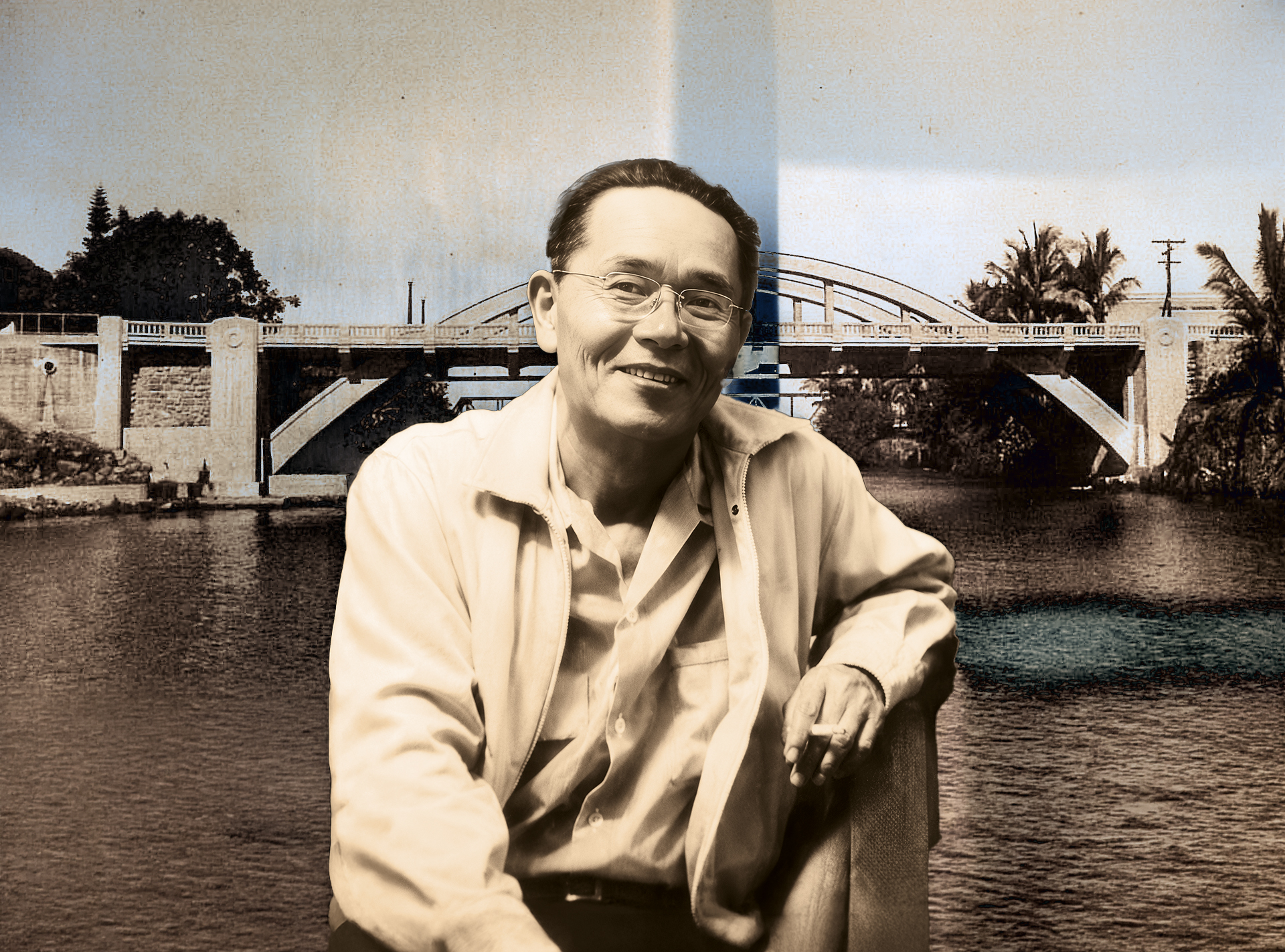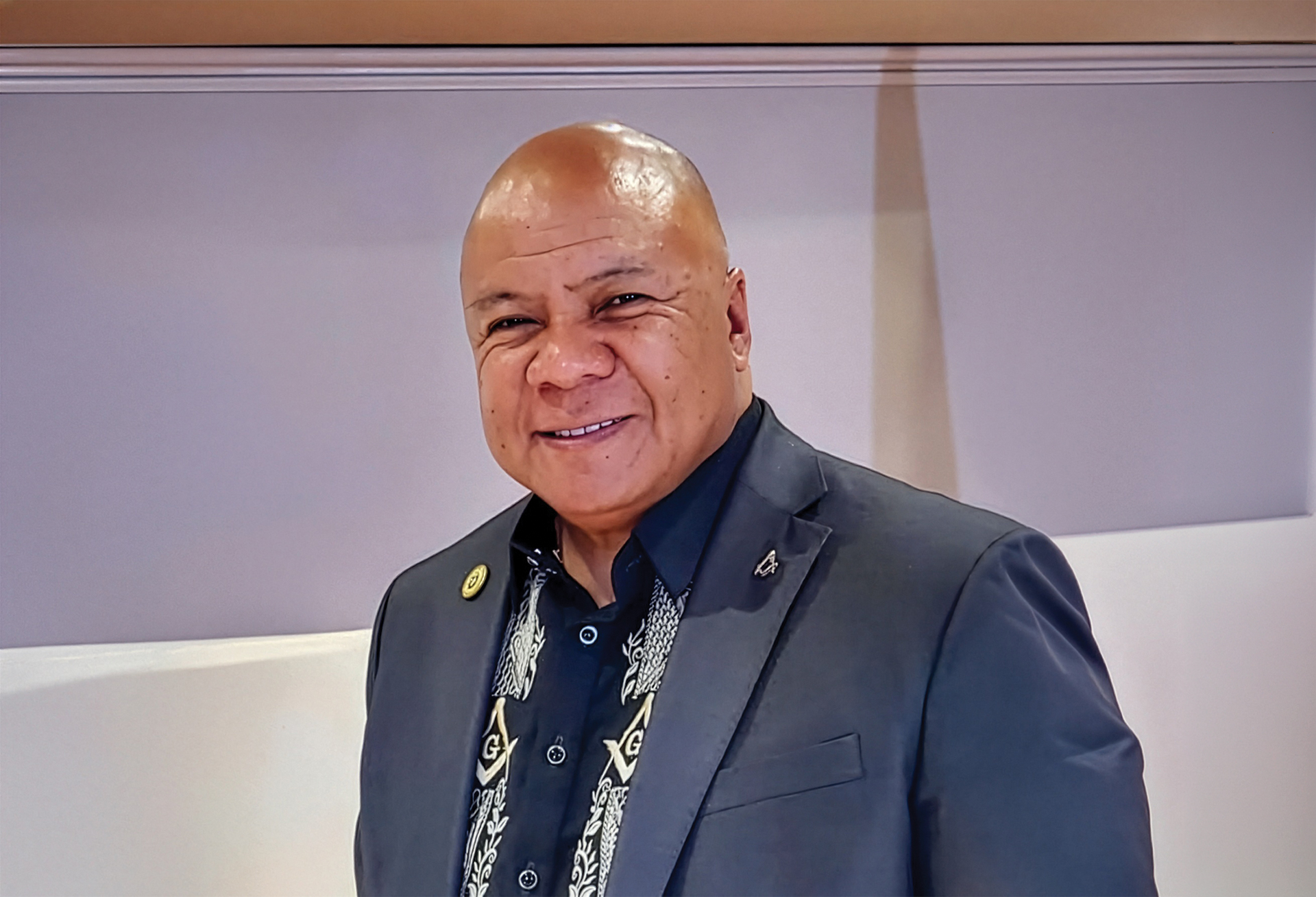

Kawika McKeague has worn many hats at G70: technical planning, project management, cultural planning leadership and principal are among the roles he’s held in more than 20 cumulative years at the company. McKeague was named G70 president in 2025, a position he serves with kuleana and integrity.
“If I’m doing my job right, our work helps restore dignity, strengthen belonging and leave communities better than we found them,” McKeague says.
Beyond his education in political science, historic preservation and urban and regional planning, McKeague is a student of hula and music. His unique sense of professionalism inspires industry progressiveness anchored by traditional Hawaiian values.
How do you apply what you’ve learned in hula and music to your current role?
For me, hula and music are not separate from leadership. They are part of the training ground that shaped how I carry responsibility and how I move through spaces with respect.
In hālau, especially as a haumāna [student] of Kumu Vicky [Holt Takamine] and graduating as both an ʻolapa [dancer] and a hoʻopaʻa [chanter], you learn what it means to be entrusted with something that is not yours to own. You learn discipline, but more than that, you learn kuleana. You learn when to step forward and when to hold space. You learn that your job is not to take the spotlight, but to help the whole carry the story correctly, with integrity.
That mindset is exactly how I approach leadership in a firm like G70. The work is not about me. It is about what we are building, who we are building with, and whether we are doing it in a way that honors people and place.
Music, in equal measure, has always been part of how I make sense of the world and my place in it. I was raised in a family of musicians, and over time I came to understand that Hawaiian music is not about performance as much as relationship. It asks you to listen closely, to notice where things are holding together and where they are beginning to drift.
Sometimes your role is to anchor the rhythm so others can move freely. Other times it is to offer something small and precise that lifts the whole without drawing attention to itself. That sensibility stays with me, shaped by the greatest musician in my life, my father, Alexander Laukakila McKeague, and one of my great teachers, Uncle Cyril Lani Pahinui.
Much of my work has required moving between different ways of seeing and knowing. The same attentiveness that is required in hula and music — to context, timing and meaning — carries into how I work across professional and community spaces. Whether in a boardroom or in community talk-story, the responsibility is the same: to carry meaning carefully and to act with clarity and accountability.


What has a typical day on the job looked like for you as G70 president so far?
There is no single typical day, but there is an underlying purpose that anchors the work. My days move between strategic leadership, supporting our teams, engaging with clients and partners, and staying connected to the communities our work ultimately serves.
Some days are outward-facing and fast-moving. Others require patience, reflection, and careful decision-making. Both are part of the responsibility.
Before the day begins, I ground myself quietly in pule [prayer], a practice my father taught me. It reminds me to slow down before decisions are made, especially when there is pressure to move quickly or when interests are in tension. That grounding is essential in work where timing, trust and long-term impact matter as much as technical outcomes.
Much of my role involves listening and alignment. I spend time helping teams navigate complexity, translating between disciplines and holding space for different perspectives to come together in a way that honors both vision and practicality. That balance between long-term purpose and day-to-day problem-solving is something I am very conscious of, especially given the nature of the work we do at G70.
What keeps the work meaningful is staying connected to people — our staff, collaborators and community partners. Those relationships are where trust is built and where the work finds its relevance. At the end of the day, my responsibility is to guide the firm in a way that is thoughtful, steady and grounded in service, so that the work we do is not only effective, but worthy of the places and people it touches.
What is on the horizon that has you most excited?
What has me most engaged right now is a growing sense of responsibility to the moment we are in. Hawaiʻi is facing a convergence of challenges that are not isolated or technical. They are social, cultural, environmental and moral — housing, climate, equity, belonging, trust. These are not separate conversations and they cannot be solved in isolation from one another.
I was taught that strength and understanding come not from novelty, but from remembering. Mai nā kūpuna mai [from the ancestors] — there is guidance in how our ancestors navigated uncertainty, imbalance and change. That does not mean returning to the past but learning how to move forward with the same clarity of purpose and responsibility to the whole.
What excites me is the possibility of bringing that kind of grounded thinking into contemporary practice, not as symbolism, but as a way of shaping real decisions.
I am increasingly interested in what I think of as the moral ecology of our work — not just what we build, but the energy we bring into spaces where decisions are made. In my experience, it is not knowledge, resources or even good intentions that move systems toward meaningful change. It is urgency paired with care. It is the willingness to step fully into kuleana, to honor those who have entrusted us with leadership, and to hold complexity without retreating into convenience.
The question that sits with me is whether we are creating enough space to truly learn our way forward together. Do we have a solution space that allows for empathy across difference, that welcomes multiple cultural perspectives as sources of insight, and that challenges us to build a Hawaiʻi that works better for all who call these islands home? This is the work that draws me forward. Not certainty, but commitment. Not answers, but the responsibility to keep asking better questions, together.

What differentiates Hawai‘i’s architecture and planning from anywhere else in the world?
In Hawaiʻi, architecture and planning are inseparable from relationships — relationships to ʻāina, to history, to community and to one another. Work here does not begin on a blank slate. Every place carries memory, and every decision sits within layers of meaning that extend beyond the project boundary.
One of the most important nuances is that process matters as much as outcome. How decisions are made, who is invited into the conversation and whether people feel heard all shape whether a project is ultimately accepted and sustained. Trust is built slowly in Hawaiʻi, and it can be lost quickly. That reality requires patience, humility and a willingness to engage beyond minimum requirements.
Another distinction is the presence of living culture. Hawaiʻi is not a place where culture is historical or symbolic. It is practiced every day, across generations. That means planners and designers must be attentive not only to regulations and technical standards, but to cultural responsibility and context. When cultural knowledge is respected early and genuinely, it strengthens projects. When it is treated as an afterthought, it creates friction that is difficult to undo.
Finally, there is a strong sense of collective accountability. Decisions are remembered. Reputations are built over time. The work you do in one community often follows you into the next. That continuity encourages care, consistency and integrity. At its best, architecture and planning in Hawaiʻi reflect a shared understanding that what we build today shapes not only the physical environment, but the social and cultural fabric that future generations will inherit.
What do you do to unwind on your days off?
When I step away from work, I return to sound. Playing kī hō‘alu [slack key guitar] with family and friends has always been a kind of therapy for the soul. The open tunings, the patience it requires, the way the music asks you to slow down and listen differently. It is immersive and grounding, and it reminds me that healing does not always come from fixing something, but from staying present with it.
That same instinct shows up in a more unexpected way: I am very much a product of the 1980s and I still enjoy gaming. I am part of a small “Fortnite Over 50” group, a loose circle of people who come together simply to play. There is no posturing, no politics, no drama — just shared adventures, laughter and the freedom to be playful.
Both, in their own way, bring me back to balance. One is rooted in tradition and memory, the other in curiosity and joy. Together, they remind me that staying whole means making room for seriousness and lightness, for discipline and play. That balance is what allows me to return to the work clear, steady and grounded.